
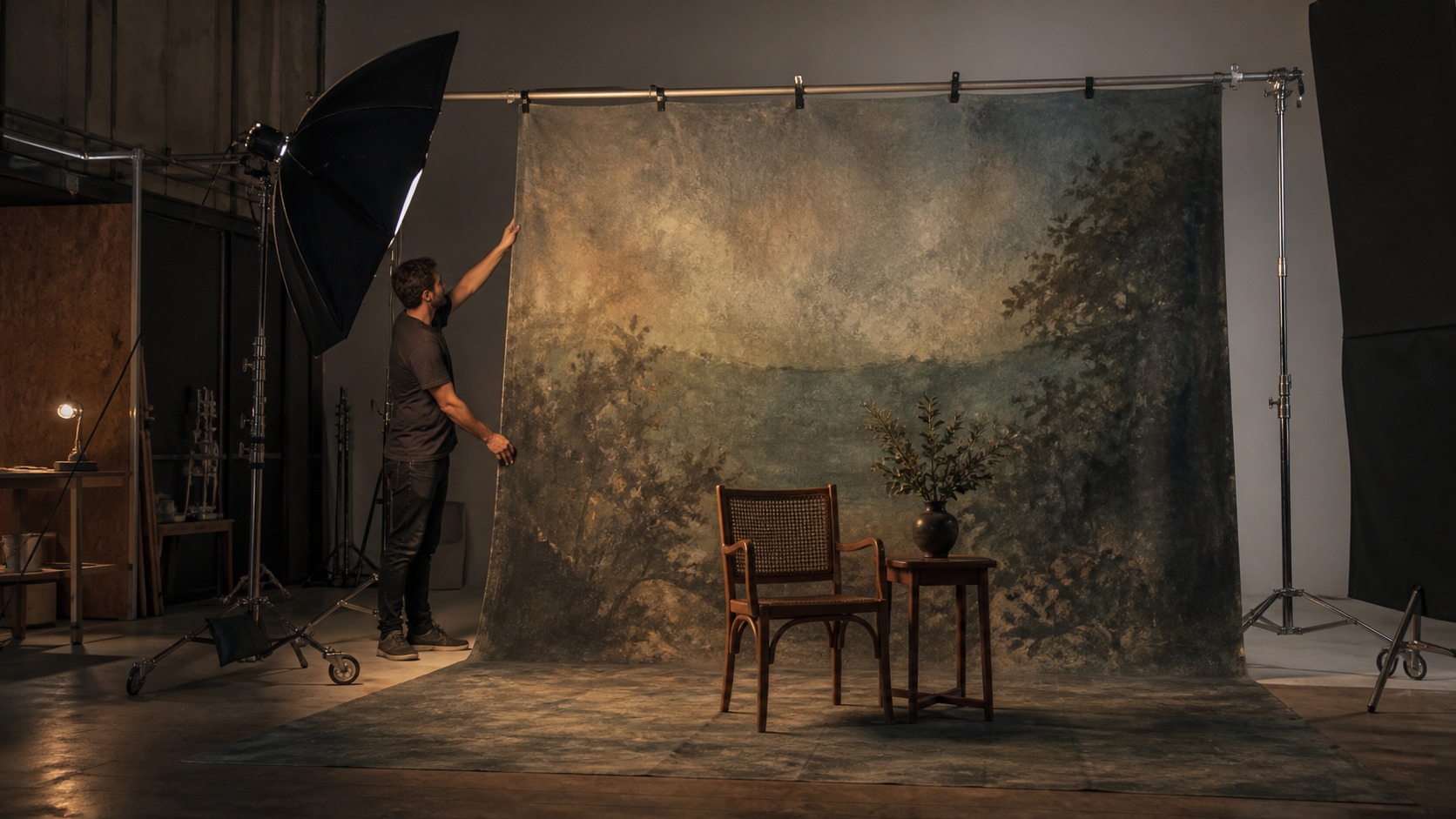
Canvas Backdrops Give Sets Texture, Depth, and Control
Canvas backdrops remain useful for film, stage, and photo sets because they create atmosphere without requiring a fully built location. A painted or printed canvas can suggest a room, landscape, weathered wall, abstract color field, or theatrical world while staying movable, reusable, and easier to light than many improvised backgrounds. The best results come from treating the backdrop as part of the set, not a flat decoration behind the subject. Scale, texture, distance, lighting, floor transition, and camera angle all decide whether the canvas feels believable.
A: Yes, when scale, lighting, lens choice, and subject distance are planned together.
A: Yes, especially when the design reads boldly enough from the audience.
A: Far enough to reduce unwanted shadows and create depth when space allows.
A: Not always, but they require handling, focus choices, or lighting control.
A: Only when the scene needs that effect; balance usually matters more.
A: Yes, props bridge the physical set and the painted or printed world.
A: Yes, heavy canvas requires safe support for people and equipment.
A: Always, because the lens sees scale, texture, and edges differently.
A: Yes, if they are rolled, handled, stored, and repaired carefully.
A: The viewer feels the setting without stopping to notice the canvas.
Choose the Backdrop for the Production Job
Different productions ask different things from a canvas backdrop. A portrait shoot may need subtle tone and texture, a stage scene may need bold readability from distance, and a film set may need enough realism to survive the camera. Choosing the backdrop begins with the job it must perform. Visual beauty alone is not enough.
Photography often benefits from restrained surfaces. Soft mottled canvas, gentle scenic color, and non-distracting texture can support faces, products, costumes, or props without stealing attention. Highly detailed backdrops may work for fashion or editorial shoots, but they can overwhelm simple portraits. The subject should remain the reason for the image.
Film work requires camera-aware detail. A backdrop seen out of focus can be looser than one used in sharp focus behind an actor. Close shots reveal seams, weave, brush marks, and repeated print patterns more quickly than wide shots. Test through the lens before trusting the eye alone.
Stage backdrops need larger gestures. Audience distance, stage light, and movement flatten subtle detail, so the canvas may need stronger shapes and clearer value separation. What looks exaggerated up close may read naturally from the seats. Theater design often asks canvas to communicate quickly.
Production mood should drive the choice. A romantic scene, product catalog, period interior, music video, and school play each need different levels of realism, texture, and color. The backdrop is successful when it supports the production's world. It should not look like a generic rental pulled into the wrong story.
Budget should follow function rather than size alone. A smaller high-quality canvas may outperform a huge cheap backdrop if the camera never sees the extra width. Conversely, stage and group photography often justify larger materials because framing flexibility matters. Spend according to use, not impulse.
Plan Scale, Distance, and Lens Perspective
Scale determines whether the backdrop feels like space or fabric. A canvas that is too small forces tight framing and can reveal edges, stands, or floor transitions. A large backdrop gives camera operators, actors, and photographers more room to work. Generous scale usually looks more professional.
Distance between subject and canvas matters. Moving the subject forward creates separation, allows background blur, and keeps shadows from flattening against the backdrop. Too little distance can make the scene feel pasted together. Even a few feet can improve depth.
Lens choice changes everything. A wide lens may reveal floor edges, stand hardware, wrinkles, or side gaps, while a longer lens compresses the scene and can make the backdrop feel larger. Test the intended lens before final setup. Camera perspective is part of backdrop design.
Height should be planned for movement. Actors, models, dancers, or products on platforms may require more vertical coverage than expected. If the top edge enters the frame, the illusion breaks quickly. Leave more headroom than the static setup seems to need.
Floor transition deserves special attention. A sweep, painted floor cloth, staged furniture, rug, riser, or shadow line can hide where backdrop becomes floor. Ignoring this edge makes the canvas look temporary. Set dressing should help the canvas become an environment.
Blocking should be tested before lighting is finalized. Let people move through the space and mark where they cast shadows, touch the canvas, or reveal unwanted edges. A backdrop that works in a still photograph may fail once the scene moves. Practical rehearsal protects the illusion.
Camera tests should include the intended depth of field. A backdrop that looks too painterly in sharp focus may become perfect once softened behind the subject. Another canvas may lose all character when blurred. Focus behavior is part of the design decision.
Light Canvas So It Feels Like Part of the Set
Lighting decides whether canvas reads as background or scenery. Flat frontal light can make texture disappear, while angled light can reveal weave, folds, brushwork, and surface irregularities. Neither approach is automatically correct. The lighting should match the desired world.
Backdrop light should agree with subject light. If the actor is lit from the left and the painted room behind them appears lit from the right, the scene may feel false. This mismatch is especially obvious on camera. Coordinate the backdrop's implied light with the actual lighting plan.
Separating light levels creates depth. A slightly darker backdrop can help subjects come forward, while a softly glowing background can create atmosphere behind silhouettes. Extreme differences can look artificial unless stylized. Balance matters more than brightness.
Texture needs careful control. Raking light can make canvas beautifully tactile, but it can also expose wrinkles, seams, or storage damage. Diffuse light can hide flaws but may make a scenic painting look flat. Adjust angle and softness together.
Color temperature should be tested on camera. Warm lights may make painted neutrals look aged or theatrical, while cool lights can make skin tones and backdrop color separate sharply. The camera sensor may exaggerate shifts the eye forgives. White balance and backdrop color should be tested together.
Motivated shadows make backdrops feel less flat. A window frame, plant, chair, or actor can cast believable shadows that connect real objects to the painted surface. Those shadows should support the implied scene. Random darkness only calls attention to the trick.
Rig and Handle Canvas Safely
Safe rigging begins with the weight of the canvas. Heavy scenic drops, wide muslins, and mounted canvas panels need proper stands, crossbars, clamps, sandbags, and clear load limits. Improvised hanging may seem faster, but it creates risk for people and equipment. A backdrop should never be treated like a lightweight poster.
Wrinkle management starts before the shoot. Roll canvas properly, avoid sharp folds, and give the material time to relax after storage. Some wrinkles can be steamed or weighted out, while others may need to be hidden with lighting and focus. Preparation saves time on set.
Crew access should remain clear. Keep stands, cords, bags, clamps, and ladders out of walking paths whenever possible. A beautiful setup becomes unsafe if people must step around hazards during takes or costume changes. Backdrop rigs belong inside the overall set-safety plan.
Painted surfaces need gentle handling. Gloves, clean floors, padded rolls, and protective sleeves can prevent scuffs and oil transfer. Do not drag canvas across rough surfaces unless distressing is intentional and approved. A damaged backdrop can become visible under stage or camera light.
Fire and venue rules matter for stage use. Some theaters and event spaces require flame-retardant materials or certification for hanging scenery. Confirm requirements before installation day. Compliance is part of professional backdrop planning.
Storage affects long-term value. A reusable canvas should be labeled privately, rolled around an appropriate core, kept dry, and protected from pressure dents. Good storage turns a backdrop into an asset rather than a one-time expense. Care after the shoot matters too.
Transport planning belongs in preproduction. Large canvas can require tubes, cases, extra hands, elevators, loading access, and dry holding space. Discovering these needs on shoot day wastes time and risks damage. Practical logistics are part of creative reliability.
Blend Props, Wardrobe, and Backdrop Texture
Set dressing helps the backdrop become believable. A chair, table, plants, floor cloth, practical lamp, or simple architectural element can create depth between subject and canvas. Props should not merely decorate the foreground. They should bridge the real space and painted or printed world.
Wardrobe should be tested against the backdrop. Clothing that matches too closely can disappear, while high-contrast wardrobe may fight the intended mood. Stage costumes need visibility from distance, and photo wardrobe needs camera separation. Color planning prevents accidental camouflage.
Foreground texture should relate to canvas texture. A rough painted wall backdrop may pair well with worn wood, linen, metal, or aged props, while a clean fashion backdrop may need sleeker surfaces. Material relationships make the set feel deliberate. Texture mismatch can reveal the illusion.
Depth layers improve camera realism. Place some objects between subject and backdrop, not only beside the subject. A plant edge, lamp, curtain, frame, or shadow can help the background feel part of a larger space. Layering is often more convincing than adding detail to the canvas itself.
Restraint keeps the backdrop from becoming clutter. Too many props can make a temporary set feel busy and unfocused. Choose a few objects that support scale, mood, and story. The canvas should remain the atmosphere, not a storage wall.
Prop scale should match the world suggested by the canvas. Oversized foreground furniture against a delicate distant landscape can feel strange unless the perspective is intentional. Small props may disappear against a dramatic scenic drop. Scale relationships help sell the illusion.
Test, Photograph, and Adjust Before the Take
Final testing should happen through the actual camera or from the actual seats. The eye standing beside the backdrop is not the audience's view. Take test frames, review focus, check edges, and watch for glare or wrinkles. Verification prevents surprises later.
Small adjustments often solve big problems. Moving the subject forward, lowering a light, changing lens length, adding a floor cloth, or softening a shadow can make the backdrop feel integrated. Do not replace the canvas before testing the setup. Many issues are environmental.
Continuity notes are useful for film and theater. Record backdrop height, distance, light angle, prop placement, and camera settings when a look works. Returning to the same setup later becomes much easier. A repeatable backdrop setup saves production time.
Photo sets should review both close and wide frames. A backdrop may look excellent in a portrait crop and fail in a full-body shot where the floor transition appears. Capture the widest planned frame before committing. The frame edge is where illusions often break.
Ultimately, canvas backdrops succeed when viewers stop thinking about the backdrop. They feel the space, mood, period, or texture without noticing the material trick behind it. That invisibility is a craft achievement. A well-used canvas gives the production more world than the room actually contains.
Playback and review should include the director, photographer, or designer who owns the final image. Crew members may be focused on hardware while the creative lead sees mood, scale, and realism. Bring both kinds of attention together. Backdrop decisions are technical and aesthetic at once.
Reset time matters on multi-look days. If a production will change backdrops repeatedly, choose hanging methods and storage positions that keep the schedule realistic. A beautiful canvas becomes frustrating if every swap takes too long. Workflow should support creativity rather than drain it.
Sound departments may also care about backdrop placement. Large fabric surfaces can change room reflections, absorb some harshness, or create noise if they move during a take. Secure loose edges before recording dialogue or quiet performance. Visual scenery should not create audio problems.