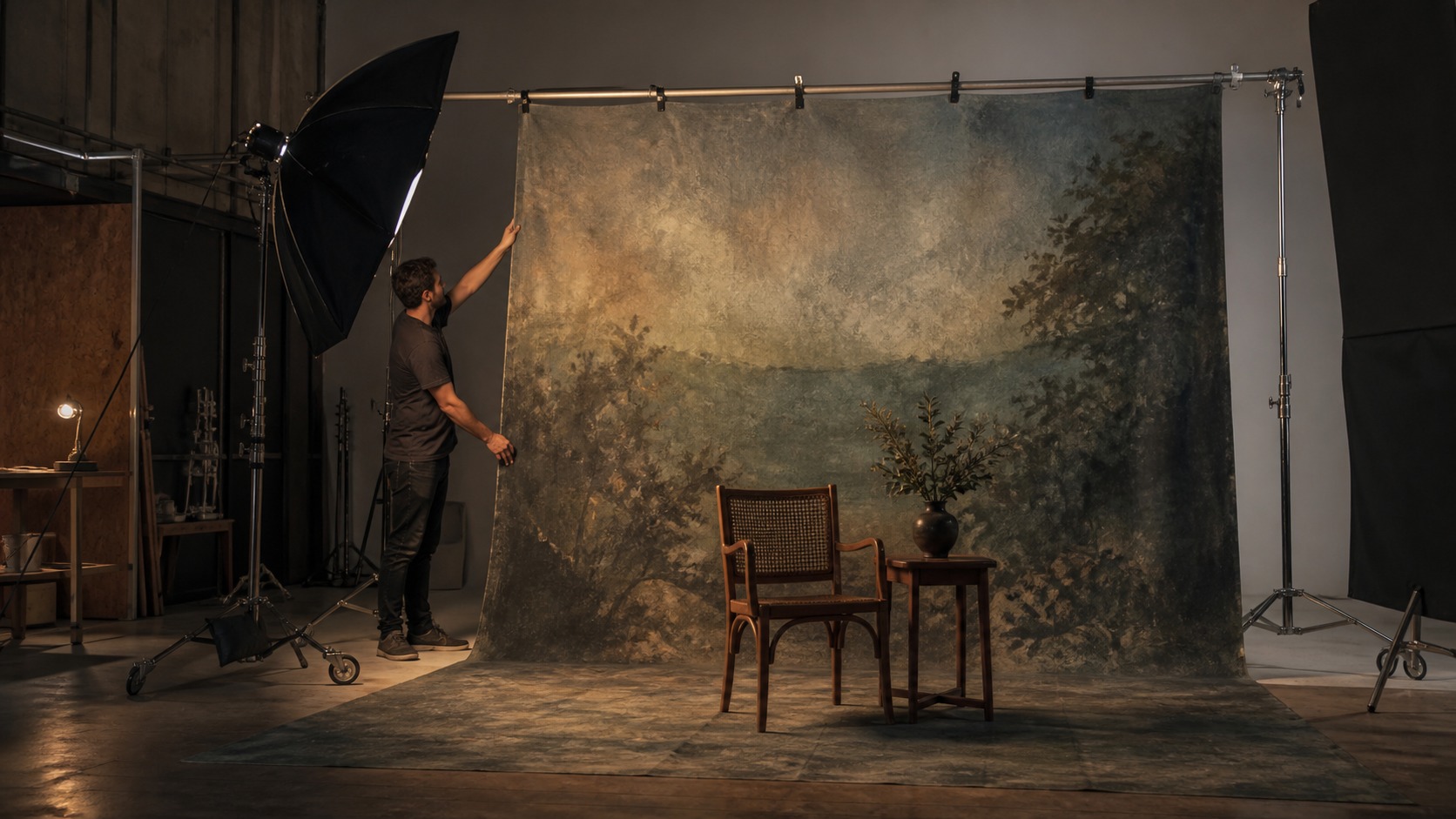
Canvas Backdrops Work When Material, Image, and Use Match
Canvas backdrops can serve photographers, filmmakers, theater designers, event teams, and studio owners, but they only work well when the material matches the intended use. A backdrop for close portrait photography has different needs from a theatrical scenic drop, and a film backdrop has to survive lens perspective, lighting, movement, and continuity. The complete decision is not just what image appears on the canvas. Material weight, surface finish, mounting method, storage, safety, and production workflow all shape whether the backdrop feels professional.
A: Yes, because they offer texture, control, scale, and reusable atmosphere.
A: Neither is always better; the right choice depends on detail, budget, and use.
A: Matte is usually the most forgiving because it keeps glare under control.
A: Base size on the widest, tallest, and most flexible frame you expect.
A: Yes, which is why rolling, handling, and setup time matter.
A: Often yes, including flame-retardant requirements and approved hanging methods.
A: Yes, especially when the production needs a specialized one-time look.
A: Test the camera or audience view under the real lighting conditions.
A: Roll it correctly, store it dry, clean it gently, and protect edges.
A: The material, image, support, lighting, handling, and workflow all fit the job.
Understand the Main Backdrop Types
Painted canvas backdrops offer unique texture and craft. They can hold layered color, scenic atmosphere, and irregular surface detail that feels richer than a plain paper roll. Artists can customize them for portraits, stage scenes, or cinematic interiors. The tradeoff is that painted canvas needs careful handling and consistent storage.
Printed canvas backdrops provide repeatability. A studio can reproduce scenic walls, landscapes, abstract textures, or branded environments more predictably than hand painting allows. Print quality matters because low-resolution images or obvious pattern repeats become distracting on camera. Good source files are essential.
Muslin and lighter fabric backdrops behave differently from heavier canvas. They may fold, drape, and travel more easily, but they can wrinkle or move under airflow. Heavier canvas often hangs with more authority and texture. Material choice should follow the production environment.
Mounted canvas panels are useful when flatness matters. Panels can create stable walls, product backgrounds, and set pieces that do not ripple, though they are less flexible to transport. They also need more storage space than rolled drops. Choose panels when rigidity matters more than portability.
Scenic floor canvases extend the illusion downward. A floor cloth, painted sweep, or matching ground plane helps full-body photography, dance, theater, and wide film shots. Without a floor plan, even a beautiful hanging backdrop can feel incomplete. The ground is part of the scene.
Hybrid backdrops can combine practical and painted elements. A canvas wall may sit behind real trim, furniture, plants, or partial flats to create a more dimensional scene. This approach helps film and photography especially. The canvas supplies atmosphere while the foreground supplies depth.
Match Surface and Finish to the Camera or Audience
Surface finish changes how the backdrop behaves under light. Matte canvas is usually safest because it controls glare and keeps attention on the subject. Satin finishes can add richness but may catch highlights. Gloss is rarely forgiving unless the look is deliberately reflective.
Texture scale should match viewing distance. Fine texture may disappear on stage but look refined in close photography, while bold scenic brushwork may look exciting from seats and exaggerated in a tight portrait. Distance decides what detail means. Always judge from the real viewing position.
Color saturation needs restraint for portraits and interviews. Highly saturated backgrounds can reflect unwanted color onto skin, products, or costumes. For fashion or music video work, that color spill may be part of the style. Purpose determines whether saturation helps or harms.
Neutral backdrops are not automatically boring. Layered gray, warm plaster, faded green, smoke blue, or weathered ochre can create depth without dominating the subject. Subtle surfaces are often the most flexible studio assets. They allow lighting and styling to do more work.
Theatrical backdrops often need stronger contrast. Stage distance, haze, and changing light can erase delicate tonal shifts. Large shapes and readable value structure help scenery communicate to the back row. Theater canvas should be judged from the audience, not the paint table.
Film and video require motion tests. A backdrop may look convincing in a still frame but reveal wrinkles, texture noise, or scale issues when the camera moves. Pan, tilt, rack focus, and actor blocking can all expose problems. Moving images ask more from the surface.
Audience expectation changes the finish decision. Portrait clients may value soft flattering texture, while theater audiences need scenery that reads quickly through distance and light. Film viewers may notice tiny inconsistencies during close shots. Finish should be chosen for the viewer, not the storage room.
Choose the Right Size and Mounting Method
Backdrop size should be chosen from the widest planned use. A headshot setup needs less coverage than full-body portraits, group photos, dance, stage entrances, or wide film frames. Buying too small limits future work. Extra coverage gives the crew flexibility.
Mounting can be temporary or permanent. Portable stands work for studios and location shoots, while pipe grids, battens, wall-mounted tracks, and scenic flats may suit theaters or production spaces. The method should match weight, safety, speed, and repeatability. A good backdrop deserves proper support.
Roll systems protect large canvas when used often. Rolling reduces fold marks and helps crews change backgrounds quickly. The roll core should be wide enough to prevent hard creases. Storage mechanics affect the visible surface.
Clamps and clips should be strong but gentle. Aggressive hardware can dent, tear, or mark painted canvas, especially near the top edge. Use proper grip equipment and distribute load when needed. Damage near hanging points can shorten the backdrop's life.
Floor sweeps need enough length. A backdrop that curves from wall to floor should do so gradually, without a sharp crease behind the subject. The sweep must also extend far enough for feet, furniture, or props. Full-body work exposes short floors immediately.
Ceiling height often becomes the hidden constraint. A backdrop wide enough for the frame may still fail if the studio cannot lift it high enough for standing subjects, raised platforms, or stage action. Measure vertical space before ordering. Height problems are expensive to solve late.
Plan Color, Lighting, and White Balance Together
Color planning should happen before the first shoot day. Backdrop color interacts with skin, wardrobe, props, gels, and room surfaces. A gray-green canvas may look elegant alone and unflattering beside certain clothing. Test the whole scene rather than the backdrop by itself.
Lighting angle reveals or hides texture. Side light brings out weave and paint ridges; broad frontal light smooths them away. Both effects can be useful. Choose the angle according to whether texture should be part of the image.
White balance can change the backdrop's character. A warm camera setting may turn a neutral wall into aged parchment, while a cool setting may make it feel industrial. The backdrop and subject should be balanced together. Correct color is a scene decision, not a number alone.
Colored gels require caution. They can transform a plain canvas dramatically, but they can also make painted detail muddy or create unwanted spill. Test gels at realistic intensity before relying on them. Strong color works best when controlled.
Practical lights can sell the illusion. A lamp, window glow, stage sidelight, or motivated source gives the backdrop a reason to look the way it does. When lighting appears motivated, viewers accept the canvas more readily. Believability often comes from light logic.
Continuity depends on notes. For film, theater runs, and repeat photo setups, record lamp position, camera settings, backdrop height, distance, and any gels or flags. Small changes can alter the background's mood. Documentation saves reshoots and confusion.
Monitor review is more reliable than judging from the floor. Camera settings, compression, white balance, and lens choice can change backdrop color and texture. What looks subtle in person may look noisy on video. Review on the same kind of screen the final team will use.
Care for Canvas Before, During, and After Use
Handling habits determine how long a backdrop stays useful. Clean hands, gloves for delicate painted surfaces, padded rolls, and dry storage prevent many common problems. Canvas may be sturdy, but the image surface can still be vulnerable. Care should be part of the production routine.
Wrinkles should be addressed patiently. Some canvas relaxes after hanging, some responds to gentle steaming, and some needs weighting or rerolling. Rushing with harsh heat or sharp pressure can cause more damage than the wrinkle itself. Know the material before treating it.
Cleaning depends on the surface. A plain dyed canvas, sealed painted canvas, and printed coated canvas may all respond differently to moisture or abrasion. Spot-test in an inconspicuous area when cleaning is allowed. When in doubt, ask the maker or supplier.
Transport needs protection from pressure and weather. Long rolls should be supported so they do not bow, and canvas should stay dry in transit. Moisture can stain, warp, or encourage mildew. A backdrop is production equipment, not loose fabric.
Repair decisions should consider visibility. A tiny scuff may vanish out of focus but become obvious under raking stage light. Document damage and test it under actual use conditions. Not every flaw matters equally.
Retirement is sometimes the professional choice. A backdrop with permanent creases, stained areas, or unsafe hanging points may cost more time to hide than it saves. Retire or repurpose damaged pieces before they compromise a shoot or performance. Reliability has value.
Maintenance routines should be assigned to someone specific. If everyone assumes someone else will roll, clean, inspect, and store the canvas correctly, damage becomes more likely. A simple ownership system protects expensive scenic assets. Care improves when responsibility is clear.
Insurance or replacement planning may matter for valuable drops. Custom painted canvas can represent many hours of labor and may not be quickly replaceable. Productions that travel or rent backdrops should understand liability before damage occurs. Administrative planning supports creative confidence.
Buy, Rent, or Commission with the End Use in Mind
Buying makes sense for repeated studio needs. A flexible neutral canvas, signature scenic wall, or frequently used theatrical drop can pay for itself over time. Ownership also allows consistent lighting and workflow notes. The best purchase is one that will be used often.
Renting works when the look is specialized. A production may need a period interior, fantasy landscape, oversized texture, or stage environment only once. Rental can provide scale and craft without long-term storage. Inspect condition before committing.
Commissioning offers the most control. A custom painted or printed canvas can match a brand, script, room, production palette, or exact camera need. Provide reference images, dimensions, viewing distance, lighting notes, and finish preferences. Clear briefs lead to better backdrops.
Budget should include support and storage. The canvas itself is only part of the cost; stands, clamps, rigging, floor cloths, cases, cleaning, and labor matter too. A cheap backdrop can become expensive if it is hard to handle safely. Plan the whole system.
Supplier questions reveal professionalism. Ask about material weight, flame treatment, cleanability, hanging options, print resolution, seam placement, and repair guidance. Good answers show that the backdrop is meant for real use. A complete guide always ends with practical questions.
Ultimately, the right canvas backdrop disappears into the production. It gives photographers control, gives filmmakers atmosphere, and gives theater designers scale without pretending to be the star. When material, image, lighting, and handling agree, the backdrop becomes dependable scenery. That reliability is the reason canvas remains valuable.
Lead time should be treated as part of quality. Custom painting, large-format printing, flame treatment, shipping, testing, and revisions all need room in the schedule. Rushed backdrops often reveal compromises under lights. Good scenery usually starts earlier than teams expect.
Vendor samples are worth requesting when possible. A small material sample can show texture, finish, color response, and flexibility before a large purchase. For printed canvas, a cropped proof can reveal detail quality and color behavior. Testing a small piece reduces large regrets.
Final selection should consider the people who handle the backdrop. A material that looks perfect but requires impossible lifting, cleaning, or storage may not serve the production well. Practical usability is not separate from visual quality. The best canvas is one the team can use confidently.