Heavy Canvas Art Needs a Load Path, Not Just a Hook
Heavy canvas art can look effortless on the wall, but the installation should never be casual. Large stretcher bars, deep gallery wraps, thick coatings, floating frames, and oversized dimensions can turn a canvas into a real load that needs a secure path into the wall. The safest approach starts by understanding weight, wall material, hanger type, and the way people move through the room. A heavy canvas should feel calm after it is installed: level, supported, protected at the corners, and unlikely to shift when life happens around it.
A: Yes, with properly rated anchors or studs, not with casual nails.
A: Often yes for large or heavy canvas because it spreads load and resists drift.
A: Wide or heavy pieces often benefit from two balanced support points.
A: Sometimes, but it must be strong, tight, and attached to solid points.
A: Hire help for very large pieces, masonry, stairwells, or uncertain wall types.
A: Yes, they protect paint and help stabilize the lower corners.
A: Choose hardware comfortably above the actual load, not barely equal to it.
A: Usually avoid adhesives for heavy pieces unless the system is explicitly rated.
A: Loose wire, one-point support, depth, or settling hardware can cause tilt.
A: The canvas sits level, engaged, and stable without repeated adjustment.
Weigh the Artwork and Study the Back
The first mistake with heavy canvas is assuming the size tells the whole story. Two canvases with the same width can have very different weights if one has a deep stretcher, heavier frame, thicker coating, or mounted backing. Weigh the piece or check the maker's specifications before choosing hardware. Hardware decisions should be based on load, not optimism.
The back of the canvas reveals how that load is meant to hang. Wire, D-rings, cleats, keyhole plates, and reinforced bars all transfer weight differently. A wire may be fine for a moderate piece, but a very wide or heavy canvas often behaves better with two fixed points or a cleat. The hanger should support the structure evenly rather than concentrating strain in one weak spot.
Inspect the attachment points before trusting them. Loose screws, thin wire, small sawtooth brackets, or poorly placed D-rings can fail even if the wall hardware is strong. If the factory hardware looks light for the canvas, replace or reinforce it before hanging. The system is only as strong as its weakest connection.
Also notice the canvas depth. A deep piece may pitch forward if the hanging point is too far from the wall or if the wire is too slack. That forward lean increases stress and makes the installation look unsettled. Depth changes both the mechanics and the finished appearance.
The safest load path is easy to explain from canvas to wall. Weight moves from the stretcher into the attached hardware, from the hardware into the hanger, and from the hanger into the wall structure. If any link is vague, undersized, or improvised, the whole installation deserves another look. Thinking in paths keeps the decision practical.
Weight should include any floating frame or decorative outer frame that was added after printing. Many buyers remember the canvas as lightweight before framing and forget that the finished object changed. Reweigh the final piece rather than relying on the original order description. The wall only cares about the finished load.
Choose Wall Support for the Actual Material
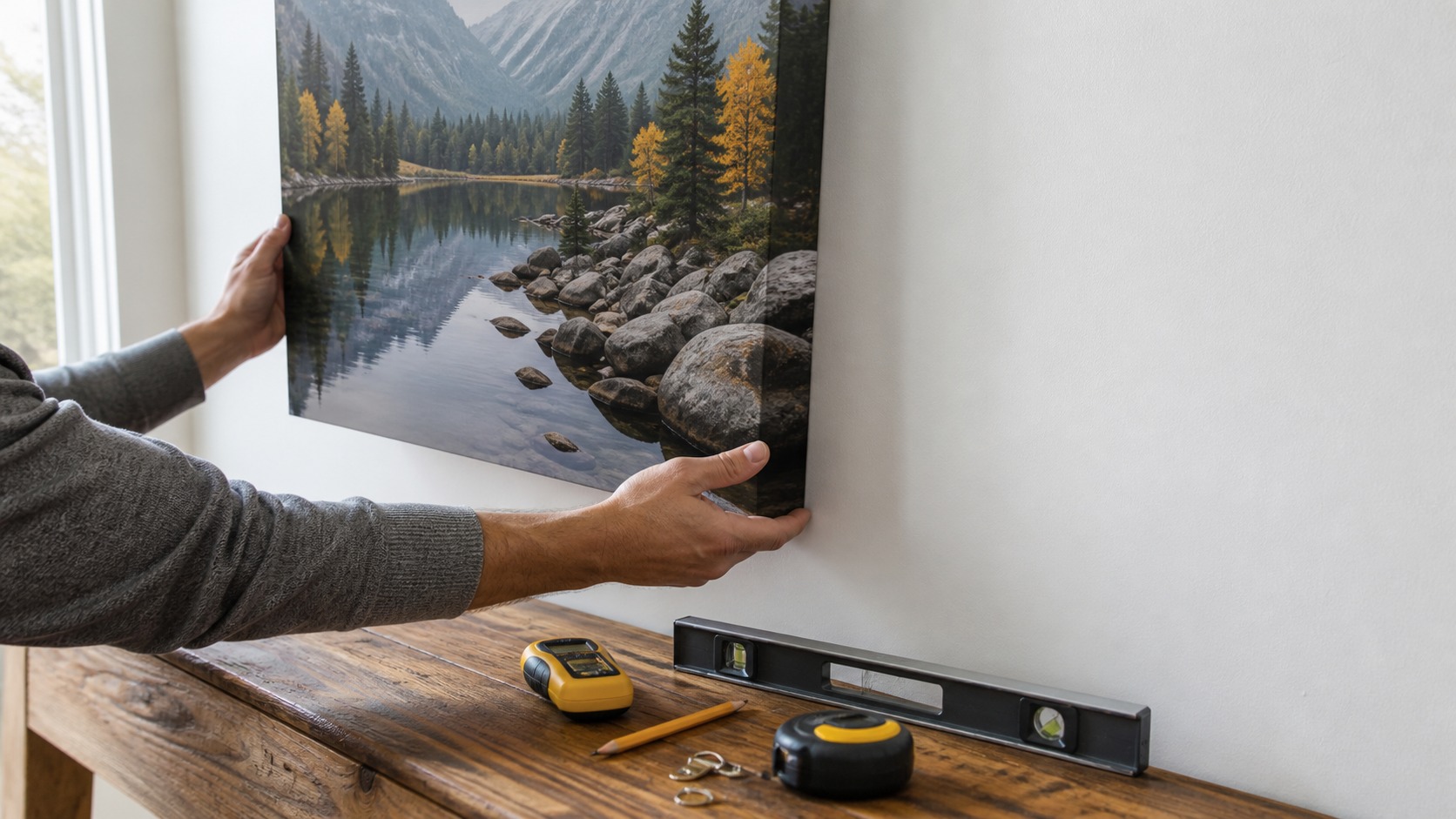
Drywall alone is often not enough for heavy canvas art unless the anchor is specifically rated for the load and installed correctly. Studs provide stronger support when they are available in the right location. A French cleat, heavy-duty picture hanger, or paired anchors can distribute weight more safely than a single nail. The right choice depends on both weight and wall construction.
Plaster walls require different caution. Old plaster can crack if treated like modern drywall, and anchors may need pilot holes or specialty hardware. Masonry, brick, concrete, and wood paneling each have their own fastening logic. When the wall material is unfamiliar, identify it before drilling.
Use hardware with a generous rating margin. A hanger rated exactly at the artwork's weight leaves little room for vibration, accidental bumps, or imperfect installation. Choosing hardware rated well above the expected load is a simple safety habit. Overbuilding slightly is not the same as making a messy installation.
For valuable or very large pieces, professional installation is a reasonable choice. The cost is small compared with repairing a wall, replacing a damaged canvas, or worrying every time someone walks past it. Professional help is especially useful for masonry, stairwells, high walls, and pieces that require two people to lift. Safety is part of protecting the artwork.
Older homes deserve particular patience because wall conditions can vary within the same room. One section may hide solid wood, another may crumble around a fastener, and another may contain pipes or wiring that changes drilling choices. Use proper detection tools and stop if the wall behaves unexpectedly. Heavy art is not the moment for guessing.
Anchors should be installed exactly as designed. Some need a specific pilot-hole size, some expand behind drywall, and some rely on biting into solid material. Mixing methods or skipping steps can reduce strength sharply. Heavy artwork deserves boringly correct installation.
If the hardware package includes several installation options, choose the one that matches the strongest available structure. Convenience should not override the wall's actual capacity. A heavy canvas hung into a stud or correctly rated anchor will feel different from one balanced on a marginal fastener. Confidence begins behind the surface.
Use Cleats and Two-Point Systems When Stability Matters
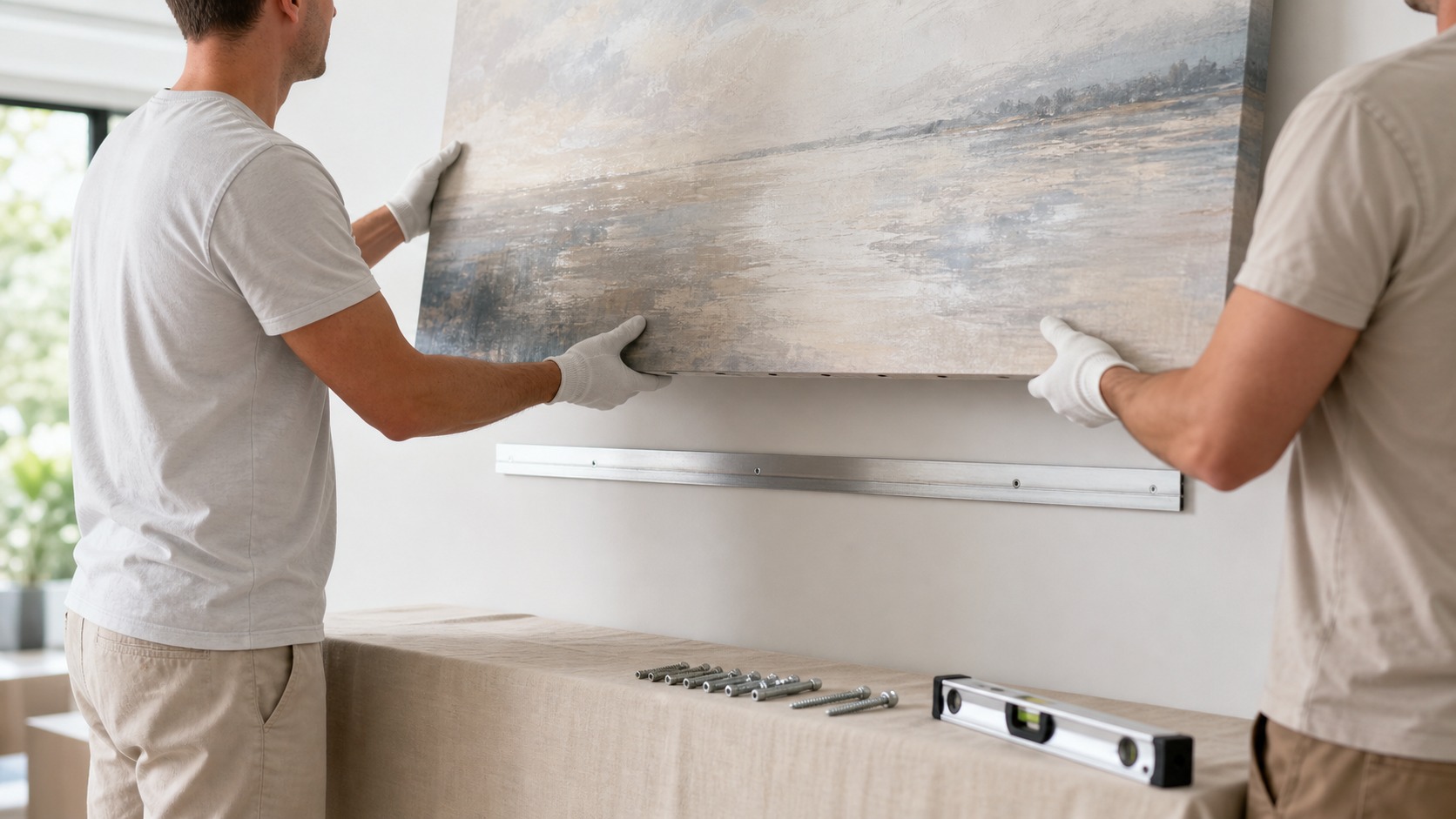
A French cleat is often one of the best solutions for heavy canvas art. It spreads weight across a wider rail, keeps the piece close to the wall, and resists sideways drift better than a loose wire. The wall side of the cleat must be level and securely fastened, and the canvas side must be attached to solid structure. When both halves are right, the result feels clean and strong.
Two-point hanging can also improve stability. Instead of one central hook letting the canvas pivot, two supports help hold the piece level across its width. This matters for panoramic art, deep gallery wraps, and pieces in rooms where doors or footsteps create vibration. A wide heavy canvas should not need constant straightening.
Wire is not automatically wrong, but it must be sized and attached correctly. A tight, high-quality wire connected to strong D-rings can work for some pieces, while a thin loose wire may let the top lean forward. If the canvas feels heavy in your hands, inspect the wire with skepticism. The hanger should match the object, not tradition.
Whatever system you choose, rehearse the lift. Know how the canvas will engage the hook or cleat before people are holding its weight against the wall. A practice motion without the artwork can reveal awkward reach, blocked access, or the need for a second helper. Heavy art rewards choreography.
A cleat should also match the width of the canvas. A very short cleat on a very wide piece may still allow twisting or side stress. Wider support distributes weight and helps the top edge feel settled. The hardware should feel proportional to the object it holds.
Cleats also make leveling easier over time. Because the support spans more width, the canvas is less likely to rotate after small bumps. That matters in hallways, dining rooms, and above furniture where people move nearby. Stable art feels more expensive because it stays where it belongs.
Protect People, Corners, and Paint During the Lift
Heavy canvas installation is a handling job as much as a wall job. Clear the floor, move furniture, protect corners, and place tools where no one will step on them. The canvas should travel through a clean path from staging surface to wall. Most accidents happen when people improvise while already carrying the piece.
Lift from structural areas rather than the flexible fabric face. Hold the sides or stretcher where pressure will not dent the image. If the canvas is too wide for one person to control comfortably, use two people. A helper is not a luxury when weight and size combine.
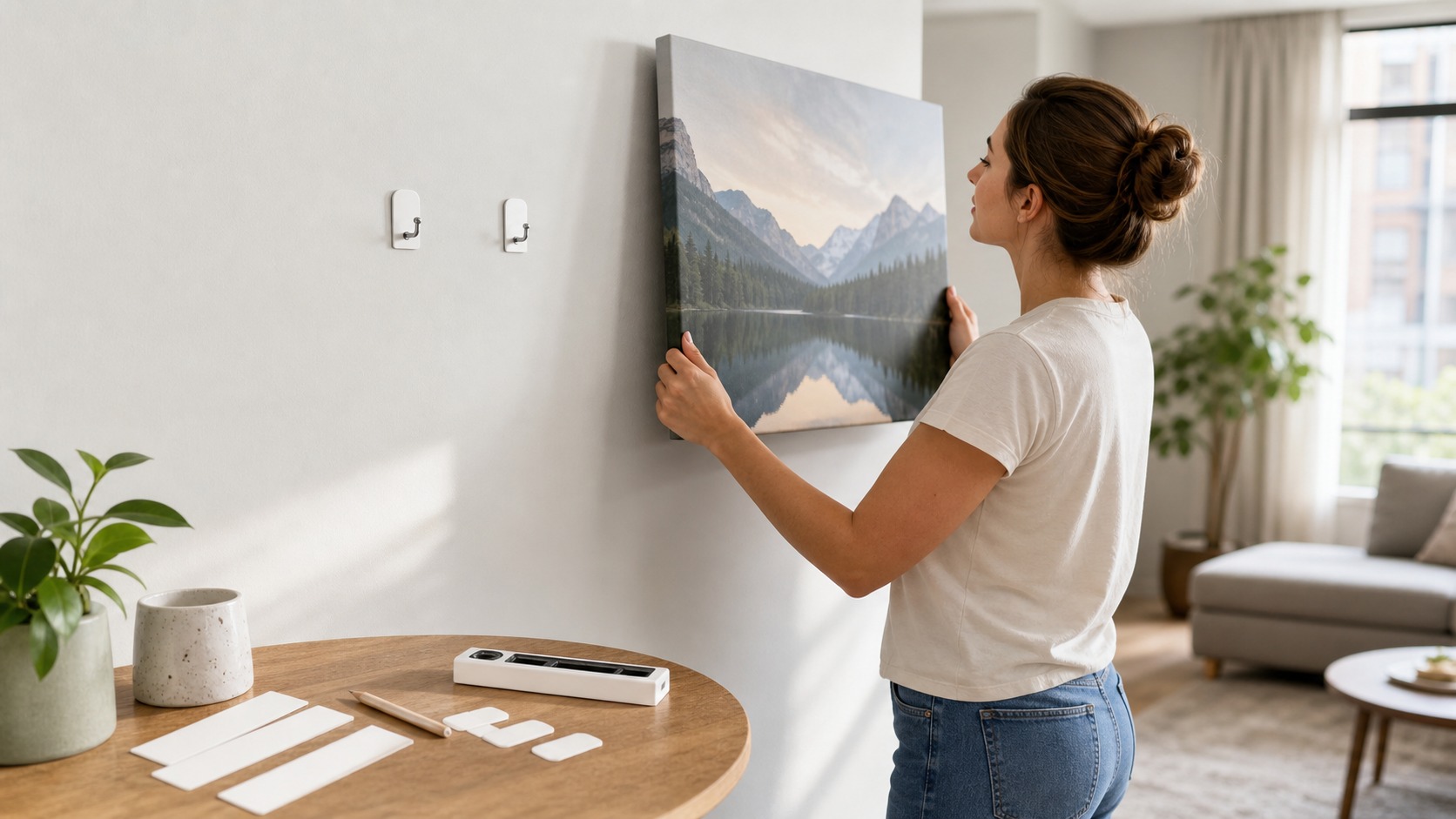
Protect the lower corners with clean bumpers or pads after hanging. Heavy canvases can mark paint if they tap the wall, and deep wraps can leave visible rub points. Bumpers also help the piece sit evenly and reduce small shifts. They are a finishing detail with a practical job.
Avoid installing heavy art when the wall is wet with fresh paint or the room is crowded with renovation dust. Both conditions increase risk to the wall and the canvas surface. A clean, dry, settled room makes careful installation easier. Timing can be a safety tool.
If a ladder is needed, the lift becomes more complicated. One person should not climb while wrestling a heavy canvas with one hand. Stage the piece, confirm ladder footing, and use help so the final motion is controlled. The safest installation is the one that never asks someone to improvise balance.
Communication during a two-person lift should be simple. Agree on words for lift, pause, left, right, and release before the canvas is in the air. That may sound excessive, but heavy art leaves little room for confused motion. A calm lift protects hands, wall, and artwork.
Corner protection is especially important with dark wrapped edges. A small scuff can reveal a lighter mark and make a new canvas look worn immediately. Soft staging surfaces and careful lifts prevent those marks before they happen. Heavy art should arrive on the wall without evidence of the struggle.
Test Security Without Abusing the Installation
Once the canvas is on the wall, do not simply walk away. Check that the hanger is fully engaged, the piece is level, the lower corners sit evenly, and the top does not lean forward more than expected. Look from the side and from the main viewing position. Security and appearance should be judged together.
A gentle stability check can reveal problems. Lightly touch the sides to see whether the piece shifts, rattles, or lifts too easily from the hanger. Do not yank or stress the system; the point is to notice whether normal household movement could disturb it. If the canvas feels nervous, improve the hardware before calling it done.
Recheck the installation after a day or two. Hardware can settle slightly, especially on older walls or with wire systems. If the piece tilts, leans, or creates new marks, correct the cause rather than straightening it repeatedly. A heavy canvas should become boringly stable.
Security checks should include sound. A heavy canvas that clicks, scrapes, or rattles when lightly touched may not be seated correctly. Quiet hardware usually means better contact and less movement. Listen as well as look.
If the canvas is above seating or a bed, check the installation with extra seriousness. Gravity changes the consequence of failure when people rest beneath the art. Stronger hardware and clearer attachment are not optional in those placements. Comfort depends on trust.
Know When the Safer Choice Is More Hardware
Minimal hardware looks appealing, but heavy canvas art should not be treated as a test of how little support you can get away with. A second anchor, cleat, stud connection, or stronger hanger may be the difference between a confident installation and a future failure. The best hardware disappears visually while doing serious work. Security can be quiet.
The room's use should influence the margin of safety. Art above a bed, sofa, stair landing, or busy hallway deserves more caution than art in a quiet corner. If people sit, sleep, or walk underneath it, the installation should be conservative. Weight overhead changes the risk calculation.
Heavy canvas can be safely enjoyed for years when the whole system is respected. Study the artwork, choose support for the wall, handle the piece carefully, and verify the result after it settles. That process does not make the project complicated; it makes it responsible. A secure installation lets the artwork command attention for the right reasons.
Future removal should be considered too. A heavy canvas may need two people to lift it off a cleat or wire safely, and hidden hardware can surprise the next owner. Keep a note about how the piece is mounted. Clear information prevents damage later.
A secure heavy-canvas installation should also survive ordinary cleaning around it. If dusting the wall or vacuuming nearby makes the piece move, the support is too fussy. The artwork should remain steady during normal home care. Stability is measured after real life begins.
If the canvas ever comes down for repainting, inspect the hardware before reinstalling it. Screws can loosen, cleats can bend, and wall anchors can lose strength during removal. Reusing hardware without checking it turns yesterday's safe installation into today's assumption. Heavy pieces deserve a fresh look every time.