Canvas Care Works Best as a Simple Routine
Canvas care does not need to be complicated, but it does need to respect the way a canvas print is built. The image sits on textured fabric, the fabric is pulled over a frame, and the surface may have a protective coating that looks durable while still reacting poorly to moisture, abrasion, heat, and sunlight. A useful care routine combines light cleaning, safer display, careful handling, and occasional inspection. Done well, those habits keep the print easy to enjoy instead of turning care into a stressful rescue project.
A: Use the gentlest dry method before considering anything stronger.
A: No. Canvas fabric and coatings need different treatment.
A: Repeated direct sun is risky, especially for color-rich prints.
A: Keep it upright, dry, breathable, padded, and free from pressure.
A: Gloves help when handling large, valuable, or light-colored pieces.
A: Avoid improvised fixes; ask the printer or a conservator.
A: Bathrooms, damp basements, and greasy kitchens are common trouble spots.
A: A quick seasonal check is enough for most home displays.
A: No. Coating helps, but light, moisture, and handling still matter.
A: Simple habits that fit naturally into how the room is used.
Understand What You Are Caring For
A canvas print is not paper, glass, or a painted wall. Its texture is part of its appeal, but that texture also catches dust and can make rubbed areas more visible. The stretched fabric can dent under pressure, while the coating may show sheen changes if cleaned too aggressively. Care starts with seeing the object accurately.
Different canvases need different caution. A decorative open-edition print in a low-risk room is not the same as a limited edition, commission, or family photograph on premium canvas. The more meaningful the piece, the more conservative your care should be. Value is not only monetary; replacement difficulty and emotional importance count too.
Household routines should work around the canvas rather than through it. When vacuuming, moving furniture, watering plants, or opening curtains, notice whether the artwork gets bumped, misted, or blasted with light. Many small hazards are created by ordinary chores. Adjusting the room flow is an easy form of care.
New owners should also notice the difference between canvas texture and dirt. The weave can create tiny highlights, shadows, and flecks that are part of the printed object. Trying to erase normal texture can damage the surface. Learn how the canvas looks when it is clean so later changes are easier to judge.
It also helps to separate appearance care from repair. Dusting, safer placement, and careful handling are owner tasks. Flattening dents, correcting coating defects, removing stains, or tightening a stretched surface may require maker guidance. Knowing the boundary keeps simple care from turning into accidental restoration.
Build a Low-Risk Cleaning Routine
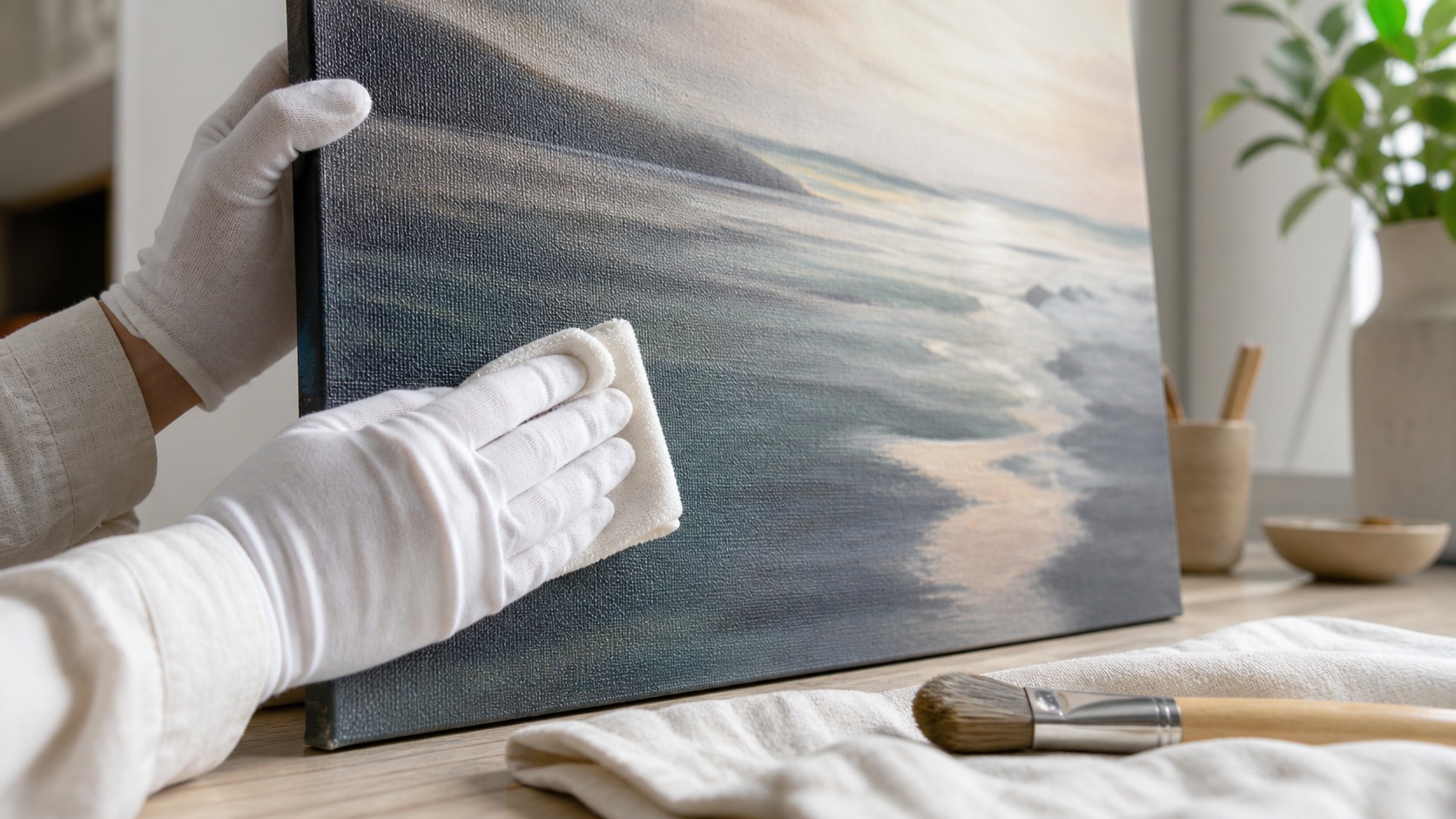
Routine cleaning should focus on loose dust. Use a clean dry microfiber cloth, a soft brush, or a gentle air blower, and avoid household cleaners unless the print maker specifically approves a method. Move lightly from top to bottom and support the canvas by the frame. The best cleaning session leaves no new shine, dampness, or rubbed area behind.
Set a schedule that matches the room. A canvas in a quiet bedroom may need less attention than one near an entryway or busy living space. Small, gentle cleanings prevent dust from becoming grime. Waiting years and then scrubbing is the risky version of canvas care.
Spots deserve a different mindset from dust. Do not treat fingerprints, grease, mildew, or drink splashes as routine cleaning problems. Identify the risk, stop before using moisture, and ask the printer for care guidance when the surface matters. A cautious pause can save the print.
Children and guests can enjoy canvas art without treating it as fragile, but high-touch placement should be intentional. A narrow hallway or stair turn may not be the right home for a delicate print. If touching is likely, choose a sturdier decorative piece or hang the important canvas elsewhere. Good care includes realistic placement.
A care routine is also easier when the artwork has a designated storage plan. If you rotate seasonal prints, prepare clean covers and a dry upright location before taking anything down. Improvised storage invites dents and dust. Planned storage keeps rotation from becoming accidental damage.
Supplies should be boring by design. A plain cloth, a soft brush, clean gloves, and a safe surface do more for canvas than a cabinet full of specialty cleaners. The absence of dramatic products is a strength. Basic tools make it easier to avoid overcleaning.
When dusting a gallery wall, clean one canvas at a time instead of sweeping across the whole group quickly. Each piece may have a different finish, texture, or edge condition. Slower care prevents a rough cloth or loose particle from traveling across several prints. A collection deserves individual attention.
Protect Against Light, Heat, and Moisture
Display conditions shape the lifespan of a canvas print. Direct sun can fade color and heat the surface, while damp air can affect fabric tension and encourage unwanted growth. Strong vents, fireplaces, kitchens, and bathrooms introduce avoidable stress. A better wall is often more useful than a more complicated cleaning routine.
Use light that flatters without punishing the artwork. Indirect daylight, filtered windows, and low-heat LED fixtures are usually friendlier than harsh afternoon sun or hot lamps. If the canvas looks best only under intense light, the setup may be too aggressive. Good display should feel comfortable for the room and the materials.
Moisture problems can develop quietly. A wall that feels cold, a room that smells damp, or a print that grows wavy after seasonal changes deserves attention. Move the artwork before damage becomes obvious. Canvas care is easier when the environment stays boring.
Plants, diffusers, and humidifiers deserve distance from canvas art. They make rooms feel pleasant, but mist and moisture can drift farther than expected. A print does not need to be visibly wet for humidity to become part of its daily environment. Leave enough space that decor does not quietly work against preservation.
Frames, shelves, and nearby decor should not press against the canvas edge. Even light contact can create rub marks over months as the wall vibrates or the room is used. Leave a little air around the print. Protection often comes from giving the object enough space.
Heat can come from surprising places. A canvas above a radiator, near a strong lamp, or beside a sunny window may feel fine at one moment and warm later in the day. Check the wall during the hours when the room is brightest or most heated. Care depends on real conditions, not assumptions.
Handle the Print Like a Finished Object
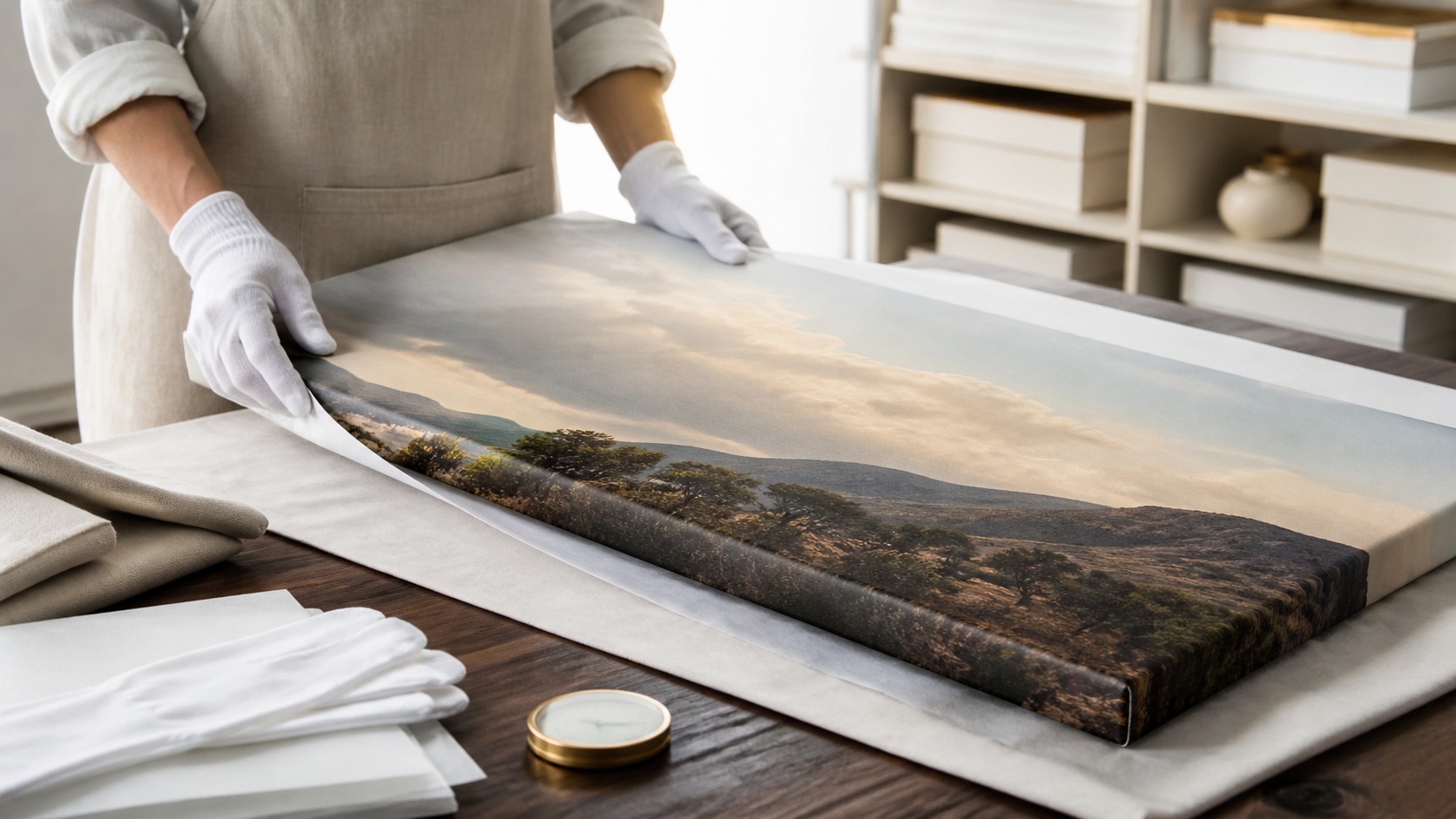
Many canvas problems happen during handling rather than display. When moving a piece, hold the stretcher or sides with clean hands and avoid pressing the face. Remove jewelry or clothing details that could scrape the surface. Large pieces should be carried with two hands or two people.
Set the canvas down carefully. Use a clean padded surface, keep hardware from dragging, and avoid leaning the printed face against a rough wall or chair. A brief careless moment can create corner dents, edge scuffs, or fabric impressions. Preparation makes handling calmer.
Storage is not a junk-room task. Keep stored canvas upright, dry, covered from dust, and free from pressure on the image. Do not wrap it tightly in plastic for long periods or stack heavy objects in front of it. The print should come out of storage looking like it was paused, not punished.
When rehanging after cleaning, check the wall hardware before the canvas goes back up. Loose hooks, stretched wire, and missing bumpers can create new wear. Care is not only about the face of the print; it includes the support system keeping the object stable. A clean canvas on weak hardware is only half cared for.
If a canvas is removed for painting or remodeling, treat it as vulnerable until it is rehung. Construction dust, leaning boards, drop cloths, and shifting furniture can all threaten the surface. Wrap it lightly, store it upright, and keep it away from the work area. Temporary displacement should not become the riskiest moment in its life.
Use Inspection as Prevention
A quick seasonal inspection catches problems while they are still small. Look for dust, fading near one edge, surface tackiness, corner wear, loose hardware, and changes in fabric tension. Check the wall too, especially near windows, vents, or exterior surfaces. The room and the artwork age together.
Inspection should not become overhandling. View the surface in soft light, make notes if something changes, and avoid touching every mark. The purpose is to guide decisions, not to create new reasons to clean. A few calm minutes several times a year is enough for most homes.
If you find a problem during inspection, change only one variable at a time. Move the artwork, adjust the light, or alter the cleaning schedule, then watch what happens. Changing everything makes it harder to know what helped. Simple experiments lead to better care decisions.
Inspection is also a chance to notice whether the artwork still fits the room. A new lamp, plant, curtain, or chair can introduce heat, moisture, impact, or sunlight. Canvas care is connected to decorating decisions. Every room update should include a quick glance at the art.
Keep Care Practical Over the Long Term
A canvas care routine should be simple enough that you will actually repeat it. Choose a safer wall, dust gently, avoid moisture, handle with clean hands, and save the maker's instructions. Those basics cover most home situations. Complicated rituals tend to disappear after the first month.
When a print has special value, raise the care level. Use better light control, document materials, avoid risky rooms, and ask for professional help with stains or unstable surfaces. That does not make the artwork fragile; it means the care matches its importance. Good stewardship lets the piece remain part of daily life.
The useful rule is simple: prevent the big risks and be gentle with the small ones. Canvas can be sturdy enough for display and still vulnerable to the wrong kind of cleaning or environment. A balanced routine keeps the art visible, clean, and stable without overreacting to every speck of dust.
Canvas care should be written down when several people share the home. A short note inside a household binder or digital file can explain dry dusting, no sprays, and safer storage. That prevents a future deep-cleaning day from becoming risky. Clear care instructions outlast memory.
For new canvas owners, the best habit is to pause before touching the surface. Ask whether the mark is dust, damage, moisture, or simply texture. That pause changes the tone of care from reactive to thoughtful. Most canvas mistakes begin when speed replaces observation.
The reward for simple care is not just longer life. It is the confidence to keep the artwork visible in the home instead of hiding it away. Canvas is meant to be seen, and good care supports that purpose. A protected print should still feel like part of the room.
The basic routine also scales. The same logic applies to a single hallway print, a home gallery wall, or a rotating collection. More artwork may require better notes and storage, but the principles remain gentle cleaning, stable display, and careful handling. Canvas care stays understandable when the foundation is clear.
If you are giving canvas art as a gift, include simple care guidance with it. The recipient may not know that sprays, damp cloths, and direct sun can matter. A short note makes the gift easier to protect without making it feel delicate. Good care advice can be part of the presentation.