Long-Lived Canvas Prints Depend on Small Choices Repeated Well
A canvas print can look good for more than a decade when the owner treats it as a real material object rather than a disposable wall accent. Longevity comes from ink quality, coating, room conditions, light control, careful cleaning, and handling habits that avoid needless stress. No single product can guarantee a perfect future, but a layered preservation routine can keep color, texture, and stretched form looking intentional year after year. The best plan is practical enough to live with, because preservation fails when it depends on heroic effort.
A: Yes, with good materials, stable rooms, and sensible light control.
A: Direct sun, moisture, heat, grime, and rough handling are common causes.
A: Most display prints benefit, but the coating must match the canvas and use.
A: Only if storage is dry, breathable, upright, and pressure-free.
A: Anything that changes sheen or requires pressure is too much.
A: They reduce heat and UV concerns, but exposure still needs moderation.
A: High or swinging humidity can stress fabric and encourage growth.
A: Rotation helps when one wall receives more light than another.
A: Yes if they matter to you, but expectations should match materials.
A: Choose a safe wall and keep care gentle and consistent.
Start with Materials That Deserve Preservation
Preservation begins before the canvas reaches the wall. Pigment inks, a compatible coated canvas, careful stretching, and a protective finish give the print a stronger foundation. A bargain print made with weak materials can still be enjoyed, but it should not be expected to age like a carefully produced fine art canvas. Knowing the starting point keeps expectations realistic.
Ask for production details when the print matters. The studio should be able to explain the canvas type, ink set, coating, drying time, and basic care limits. Those answers do not need to be technical essays, but they should be clear. A seller who treats preservation casually may not be building for the long term.
Insurance-level formality is not necessary for every home print, but a simple photograph of the displayed artwork can be helpful. It documents condition, placement, and how the colors looked when the care routine began. If fading or damage appears later, the owner has more than memory to compare against.
If you are commissioning a print, ask for a small care card at purchase. Studios often know which cleaners, cloths, coatings, and display conditions fit their own materials. Getting that guidance early prevents generic advice from overriding product-specific knowledge. The best preservation plan begins with the maker's process.
Matting and glass are not usually part of stretched canvas display, so the canvas surface carries more responsibility. That makes the production coating and room placement especially important. A paper print behind glazing has a physical barrier that canvas often lacks. Owners should compensate with gentler light, cleaner air, and better handling.
Control Light Without Hiding the Artwork
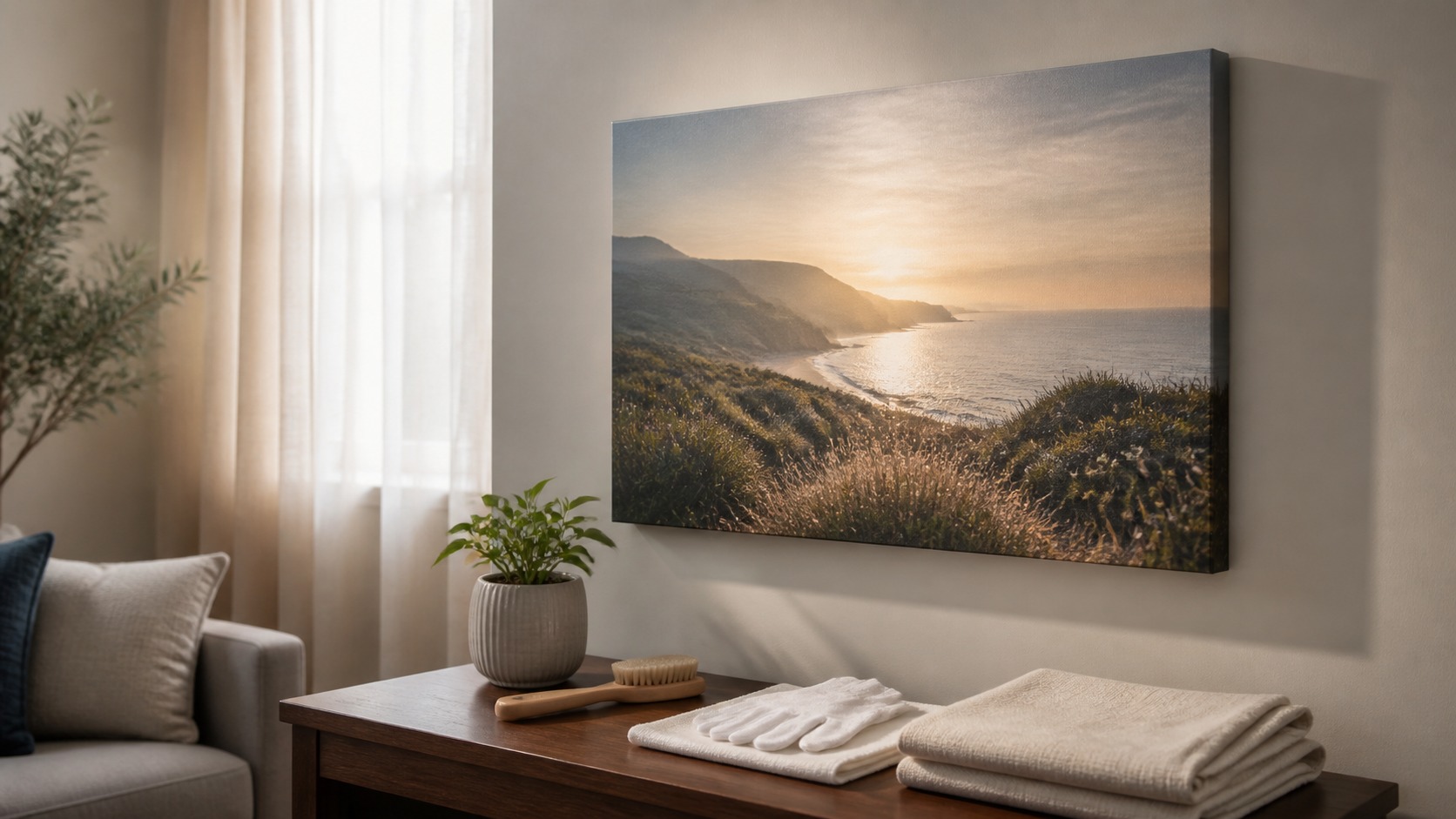
Light is one of the main forces that changes canvas prints over time. Direct sun can fade color, heat the surface, and make coatings age unevenly. The print does not need to live in darkness, but it should avoid repeated harsh beams through windows. Indirect daylight and controlled artificial light are usually the better balance.
Window treatments are preservation tools when used thoughtfully. Sheer curtains, blinds, UV-filtering film, and room placement can soften exposure without making the home feel closed. The goal is to reduce the daily burden on the print. A canvas that receives gentle light for years will usually age more gracefully than one that gets dramatic sun every afternoon.
Artificial lighting should be low heat and moderate in brightness. A quality LED fixture with good color rendering can show the artwork clearly without subjecting it to unnecessary warmth. Timers and dimmers help because they keep art lights from running at full intensity when no one is looking. Enjoyment and restraint can coexist.
Preservation also means deciding what not to display. If a room has unavoidable sun, humidity, or traffic, reserve it for replaceable decor rather than irreplaceable canvas pieces. This is not defeat; it is matching the artwork to the environment. The best wall is the one that lets care stay easy.
When ordering multiple canvases for a set, keep conditions similar across the group. If one piece sits in direct sun while the others stay shaded, the collection may age unevenly. Consistent exposure helps a series keep its relationship over time. That matters in gallery walls and triptychs.
For open-plan homes, watch how reflected light behaves. Sun bouncing from pale floors, mirrors, or glossy furniture can still brighten one canvas more than another. It may not be as severe as direct sun, but it contributes to exposure over time. The room's reflective surfaces are part of the preservation picture.
Keep the Room Stable
Canvas responds to the room around it. High humidity can encourage mold, soften materials, or make dust cling, while very dry air can stress fabric and stretcher bars. Rapid swings are often more troublesome than a single comfortable setting. A normal lived-in room is usually fine; garages, bathrooms, damp basements, and sun-baked porches are not.
Airflow can also affect longevity. A canvas placed directly above a vent, near a fireplace, or beside a kitchen may collect grime or experience repeated temperature changes. Those locations might seem convenient, but they ask more from the materials every day. A calmer wall is an easy preservation win.
If the print is especially meaningful, check the wall seasonally. Rooms change as curtains open, furniture moves, and heating systems cycle differently. A ten-year plan is not a one-time decision. Small reviews keep the original good choice from becoming a hidden problem.
Temperature swings deserve the same attention as average temperature. A room that is comfortable most of the day but bakes every afternoon can still stress a print. Canvas materials expand and contract, and coatings respond to repeated changes. Long life favors boring, steady conditions over dramatic daily cycles.
Stable does not mean sealed away. Normal air movement can help a room avoid stagnant dampness, as long as the canvas is not in the direct path of a vent. A balanced room feels comfortable to people and undramatic to materials. That is usually the right target for home preservation.
Pest and dust control rarely gets mentioned, but it belongs in long-term care. Stored canvas should not sit against cardboard that sheds fibers or in a closet where insects can hide. A clean storage area protects the fabric and the frame. Preservation includes the space around the art, not only the printed face.
A stable room does not have to be laboratory controlled. Most comfortable living spaces are suitable when they avoid extremes, direct sun, and moisture. The danger comes from special-case rooms that seem convenient but create repeated stress. Choosing an ordinary interior wall is often the simplest preservation decision.
Handle and Store Canvas Prints Correctly
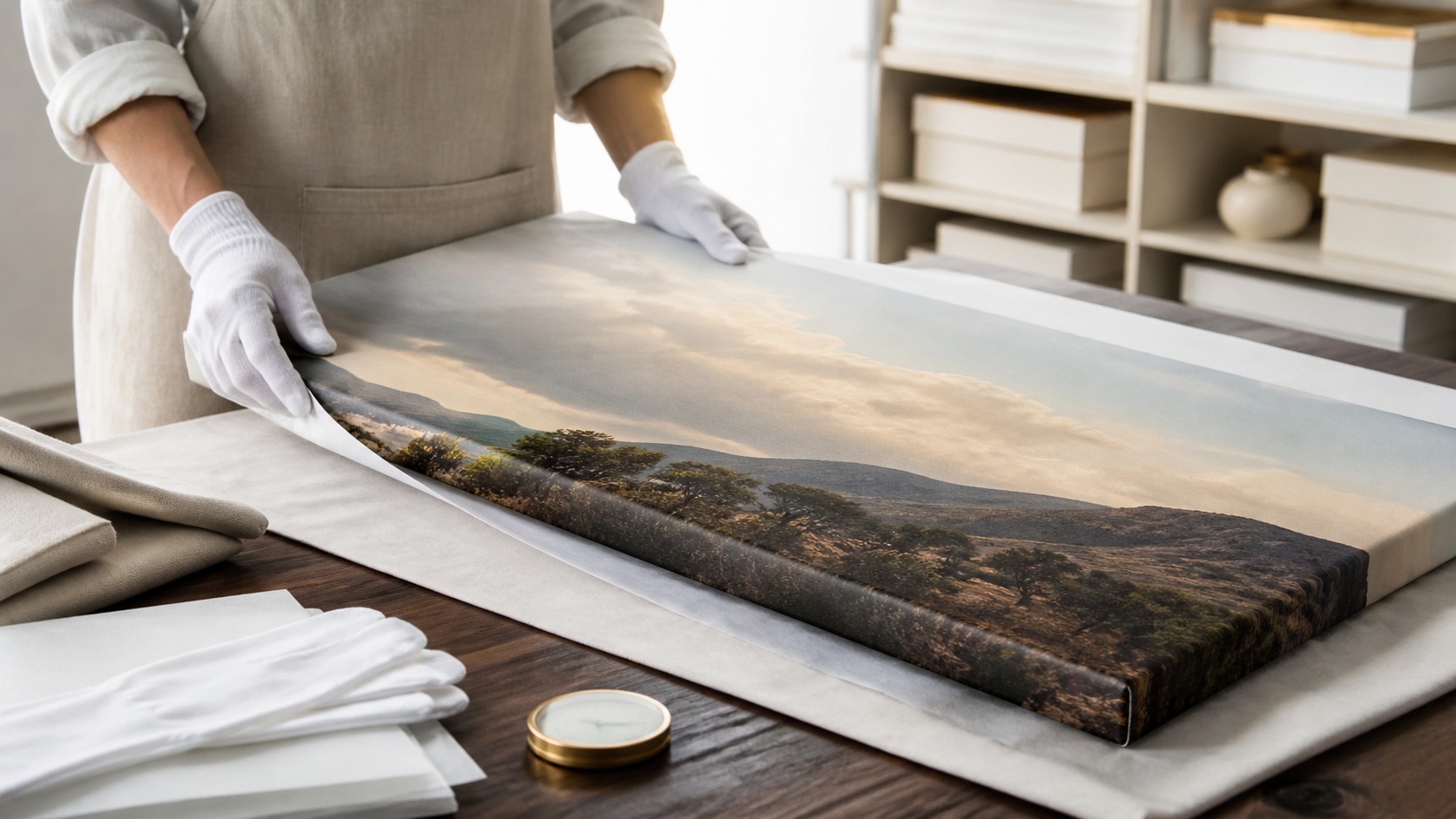
Handling causes many preventable problems. Always lift a canvas with two hands, support the stretcher, and avoid pressing the front or pinching wrapped corners. Clean hands are better than casual hands, and cotton gloves are useful for large or valuable pieces. The printed surface should not be treated as a handle.
Temporary storage needs the same respect as display. Store canvas upright when possible, protected from dust, pressure, and damp floors. Do not stack heavy objects against the face or wrap the print tightly in plastic for long periods. Canvas needs protection, but it also needs breathable, stable conditions.
Moves deserve extra planning. Cover the front with a clean soft layer, protect corners, and keep hardware from rubbing the image. A short trip across town can do more damage than years on a good wall if the piece is packed carelessly. Preservation includes the days when the artwork is not on display.
Documentation helps future care. Keep the purchase date, maker, coating, and any care instructions in a simple note. Years later, that information can guide cleaning, insurance, reordering, or conservation choices. Memory fades faster than a written record.
For long-term storage, avoid wrapping canvas so tightly that the material cannot breathe. Plastic can trap moisture, especially after a move or in a storage room with changing temperature. A soft breathable cover plus a clean dry location is usually friendlier. Protection should keep hazards out without trapping new ones in.
If you rotate art seasonally, label each storage cover and keep a simple rotation note. That prevents unnecessary unwrapping, searching, and handling. The less often a canvas is touched without purpose, the fewer chances there are for edge scuffs or pressure marks. Organization is a preservation tool.
When shipping or moving, temperature matters during the trip as well as at the destination. Avoid leaving a packed canvas in a hot vehicle or cold garage longer than necessary. Let the print acclimate before unwrapping if conditions changed sharply. A careful move protects both surface and stretcher.
Avoid storing canvas in contact with bare concrete or exterior walls. Those surfaces can transfer cold, moisture, and dust even when the room looks dry. Raise stored pieces off the floor and leave space around them. A small storage rack or padded vertical area can prevent several common problems.
Clean Less Aggressively Than You Think
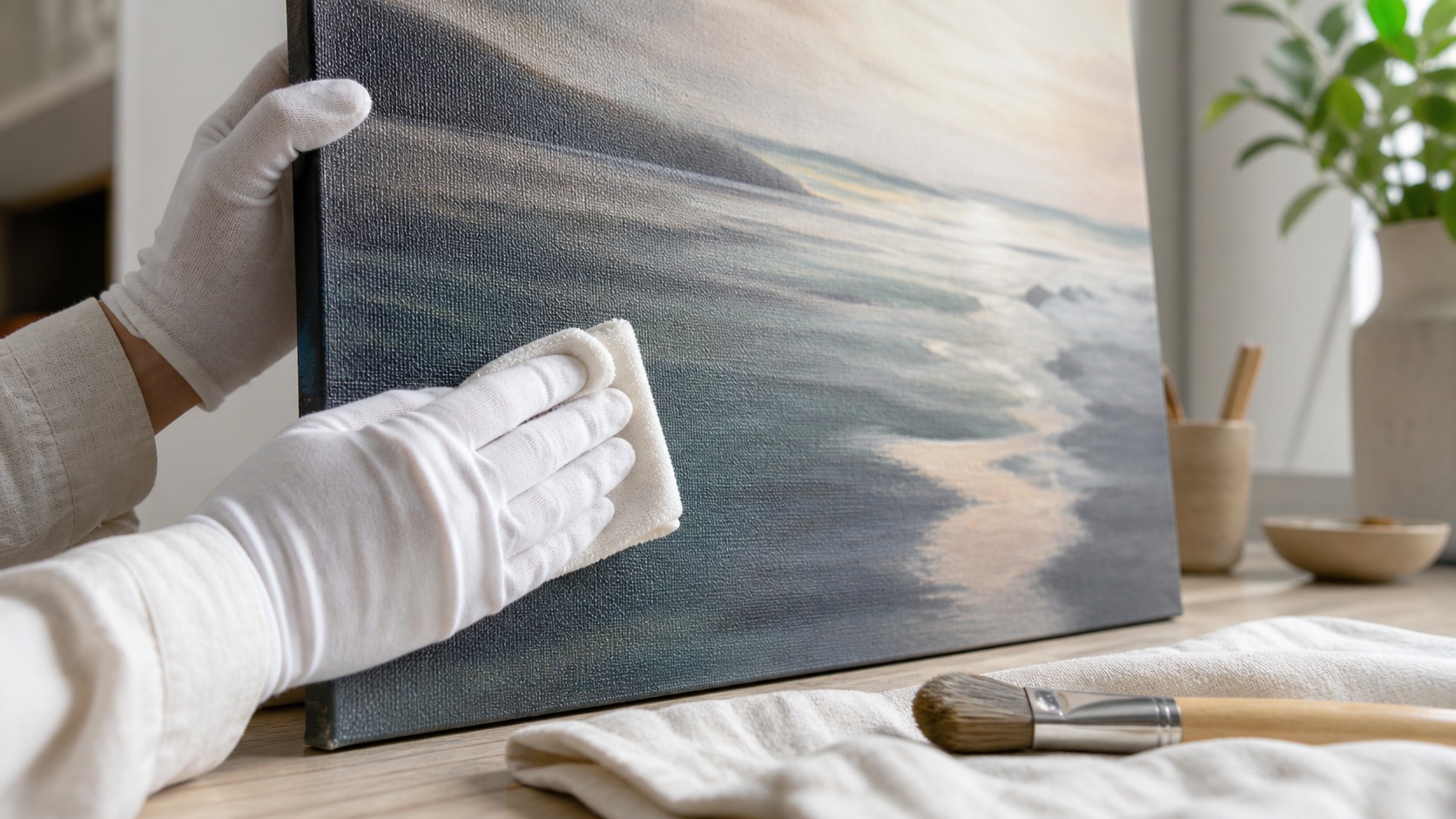
Routine dusting should be dry and gentle. A soft microfiber cloth or brush can remove loose dust before buildup becomes stubborn. Avoid sprays, wet wipes, polish, and household cleaners on the printed face. Those products may solve a surface problem by creating a finish problem.
Frequency depends on the room. A quiet bedroom print may need attention only occasionally, while a hallway or living room piece may collect dust faster. The important habit is light maintenance before grime becomes visible. Regular gentle care is safer than delayed aggressive cleaning.
Cleaning products should be kept away from the room when other chores happen. Overspray from glass cleaner, furniture polish, or disinfectant can drift farther than expected. A canvas above a console or near a mirror may receive residue without anyone noticing. Cover or move valuable artwork before heavy household cleaning nearby.
If cleaning reveals a recurring gray film, investigate the room before increasing cleaning frequency. Candles, fireplaces, cooking, open windows, and HVAC patterns can all deposit residue. Removing the source is safer than wiping the print more often. Preservation works best when it solves causes, not just symptoms.
Plan for Aging Instead of Denying It
Even well-preserved canvas prints may change subtly over many years. The point of preservation is not to freeze time completely, but to slow avoidable damage and keep the artwork attractive. A decade of normal enjoyment is a success when the print still reads as clean, stable, and color-rich. Perfection is not the standard; care is.
Match the care level to the artwork's meaning. A replaceable seasonal print can tolerate more risk than a commissioned portrait, heirloom image, or limited edition. That distinction lets you protect important pieces without turning every wall into a museum case. Common sense is part of long-term care.
The best ten-year routine is quiet: good placement, filtered light, stable room conditions, careful handling, and dry dusting. None of those habits is dramatic, but together they prevent the common causes of fading, grime, dents, and stretched-fabric stress. Canvas longevity is built by ordinary choices that remain easy to repeat.
A ten-year care plan should include permission to reassess. If the print begins to matter more over time, upgrade its placement and handling. If the room becomes brighter after renovation, add filtering or move the piece. Preservation is strongest when it can adapt to the life around it.
The owner should also decide who is allowed to clean or move the canvas. A well-meaning guest, cleaner, or family member may use the wrong product unless expectations are clear. Simple instructions are kinder than repair after damage. If the print matters, make the care boundary obvious.
Long-term preservation also benefits from realistic expectations about replacement. If the print can be reordered, keep the file or purchase link. If it cannot, treat the displayed object more conservatively. Knowing the replacement path helps decide how much risk is acceptable.
For heirloom or edition prints, consider a yearly condition photo. Use the same wall, similar light, and a straight-on angle. The comparison does not need to be perfect to reveal meaningful changes. A simple visual record supports better decisions over a decade.
The best preservation routines are shared with anyone who helps maintain the home. A cleaner should know not to spray nearby glass cleaner across the canvas, and a mover should know not to press the image face. Clear boundaries prevent well-intentioned damage. Longevity often depends on the people around the artwork.