A Complete Series Needs Mood, Variation, and a Finish Line
Scene-inspired art collections become complete series when mood is developed instead of merely repeated. A painter, photographer, decorator, or collector might begin with one emotional world, such as urban nights, dream interiors, quiet shorelines, or misted gardens, then build several works that explore that world from different distances. The challenge is balancing recognition with change. A strong series lets viewers feel the same atmosphere across multiple canvases while discovering a new reason for each piece to exist.
A: No, it needs one emotional world that can survive subject changes.
A: Enough to develop the idea without stretching it into visual padding.
A: Yes, when the shift feels gradual, motivated, or emotionally meaningful.
A: Matching sizes can work, but mixed sizes are fine with clear hierarchy.
A: Duplicate roles, weak transitions, and an ending that feels accidental.
A: Yes, if earlier pieces prepare the viewer for that turn.
A: Yes, because series unity depends on relationships between pieces.
A: Remove the one that repeats, distracts, or weakens the mood path.
A: Yes, if future pieces preserve the rules that make it coherent.
A: They should feel one mood unfolding through change, not repetition.
Start with the Emotional World
First, define the emotional world behind the series. This is more than a topic list because mood controls what the viewer feels before they identify the subject. Urban nights might feel electric, lonely, reflective, or cinematic, and each version would create a different series. The sharper the emotional world, the easier the creative decisions become.
Scene words should include sensory detail. Think about the temperature of the light, the density of the air, the distance of sounds, and the rhythm of movement. Those imagined details help shape color, texture, and composition. A mood becomes easier to paint or select when it feels inhabitable.
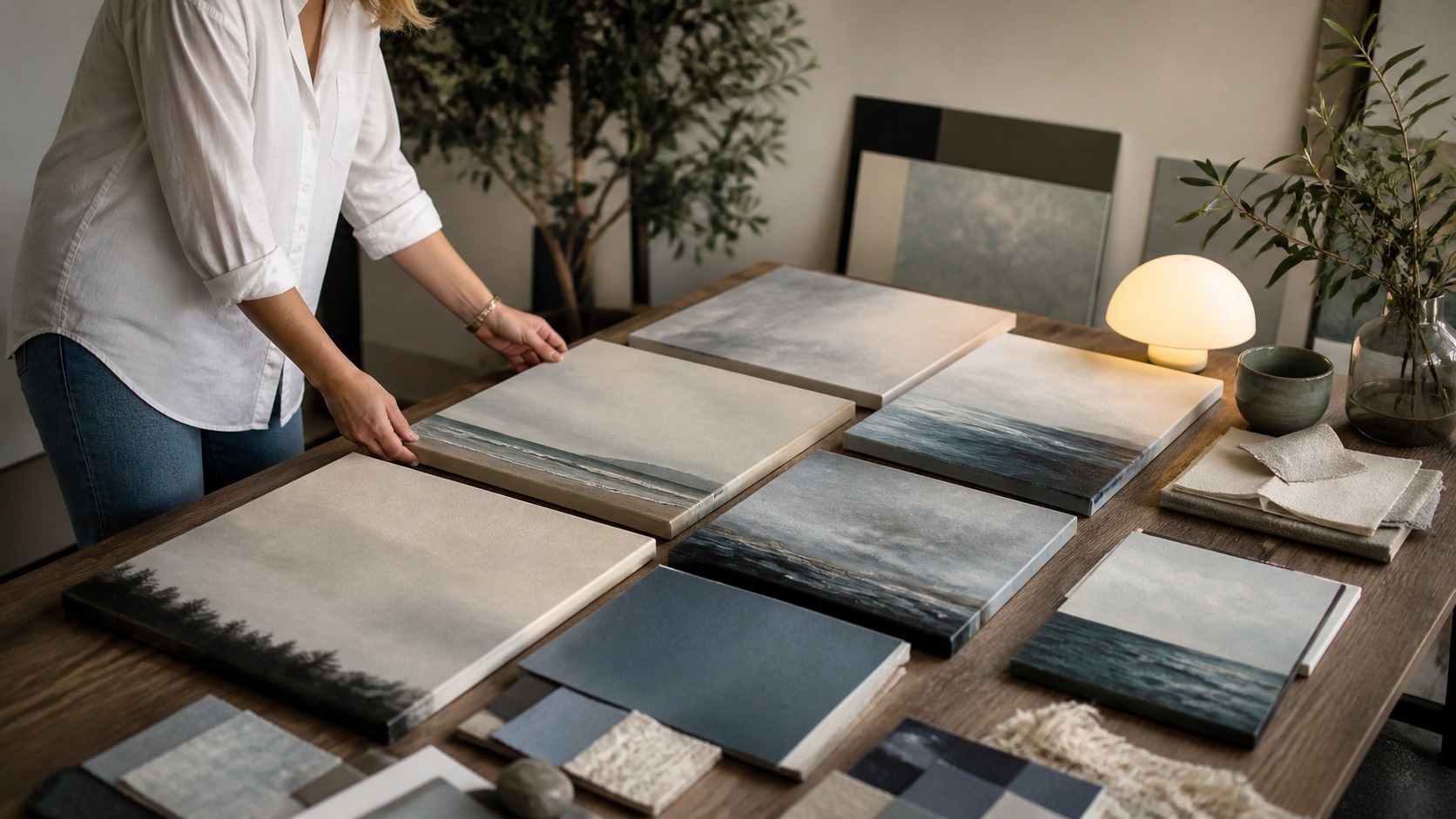
Not every piece needs to show the same location. A series inspired by ocean calm might include open water, pale interiors, shells, fogged windows, or abstract tide marks. The emotional world connects the pieces more deeply than literal subject matter. This keeps the series from becoming repetitive.
Boundaries help the series stay complete. Decide whether the mood allows bright daylight, figures, saturated accents, hard edges, or strong geometry. Some exclusions may feel limiting at first, but they give the series its identity. A complete series needs edges around the idea.
Early sketches or mockups should test mood before detail. If a rough arrangement already feels like the intended world, the concept is strong. If the mood disappears unless every title is explained, the series needs a clearer foundation. Atmosphere should survive simplification.
Reference gathering should stay selective. Too many inspirations can dilute the mood until the series feels like a collage of borrowed atmospheres. Choose a few strong references and study why they matter. The goal is not imitation but a clearer emotional compass.
Create Variation Without Breaking the Spell
Variation keeps a series from becoming a row of duplicates. Change viewpoint, scale, distance, density, or focus while protecting the underlying mood. A dream-world series might move from a wide room to a close object to an almost abstract glow. The viewer should feel progression, not restlessness.
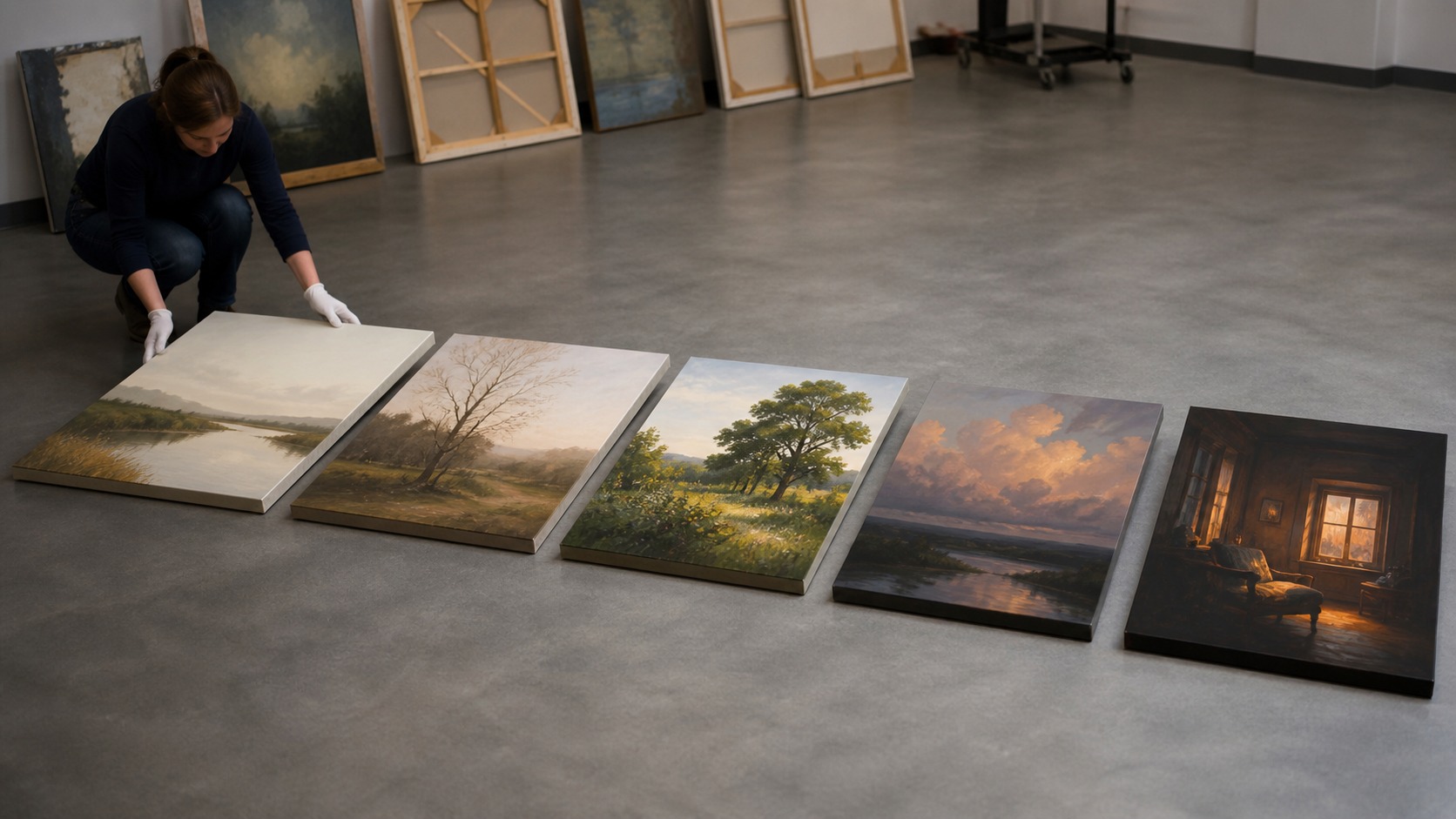
Color can evolve slowly across the series. One canvas may carry the coolest version of the mood, another may introduce warmth, and another may settle into a muted balance. Gradual color movement gives the series a sense of time. Abrupt changes need a clear reason or they will feel accidental.
Subject distance is a useful source of difference. A wide establishing piece gives viewers a world to enter, while close details make the mood more intimate. Mid-distance pieces can hold the series together. Changing distance lets the same mood breathe through several kinds of attention.
Texture can shift while still belonging. A rougher canvas may suggest weather, memory, or movement, while a smoother one may create stillness. The texture should feel like another expression of the same atmosphere. Surface variety works when it has emotional logic.
Rhythm matters across the whole group. Alternate dense pieces with open ones, dark pieces with softer ones, or quiet passages with visual accents. This pacing keeps viewers moving through the series. Even a calm mood needs internal movement.
Surprise should feel earned. One unexpected piece can become the turning point of a series if it grows from the same scene logic. For example, a warm window in a cool night group can feel powerful because the rest of the series prepared it. Unprepared surprise looks like a mismatch.
Format variation can create movement before subject matter changes. A tall narrow canvas may feel like a glimpse, while a broad horizontal piece may feel like an arrival. Changing format with intention lets the same mood expand and contract. Shape becomes part of the rhythm.
Decide the Order Like a Story
Ordering turns a group into a series. The first piece sets expectations, the middle pieces deepen or complicate them, and the final piece gives release, continuation, or reflection. Without order, viewers may still enjoy individual works but miss the larger experience. A series needs sequence as much as selection.
Opening works should invite entry. They do not have to be the loudest pieces, but they should make the mood legible quickly. A quiet opening can work if it gives viewers enough atmosphere to follow. The first canvas is a doorway.
Middle works can introduce variation and tension. This is where the series may move closer, darken, brighten, widen, or become more abstract. The middle should not simply repeat the opening in different sizes. Development makes the series feel complete.
Ending pieces need intention. Some collections close with calm, others with intensity, and others with an open question. What matters is that the last piece feels like a chosen stopping point. A series without an ending can feel like inventory.
Physical arrangement affects order. Left-to-right reading may dominate over title order, but stairways, shelves, and room entrances can create different paths. Walk through the space and notice how the sequence actually unfolds. The story should respect the architecture.
Sequence sketches can expose repetition early. Place rough thumbnails in order and ask whether the second and third works truly change the experience. If the answer is no, adjust distance, value, or subject role before making finished pieces. Early sequencing saves the series from becoming padded.
Use Format and Production as Part of the Series
Format decisions can strengthen the idea. Consistent canvas depth, finish, and edge treatment make the works feel like one body, while deliberate format changes can mark important turns. Production should never be an afterthought. The object form participates in the mood.
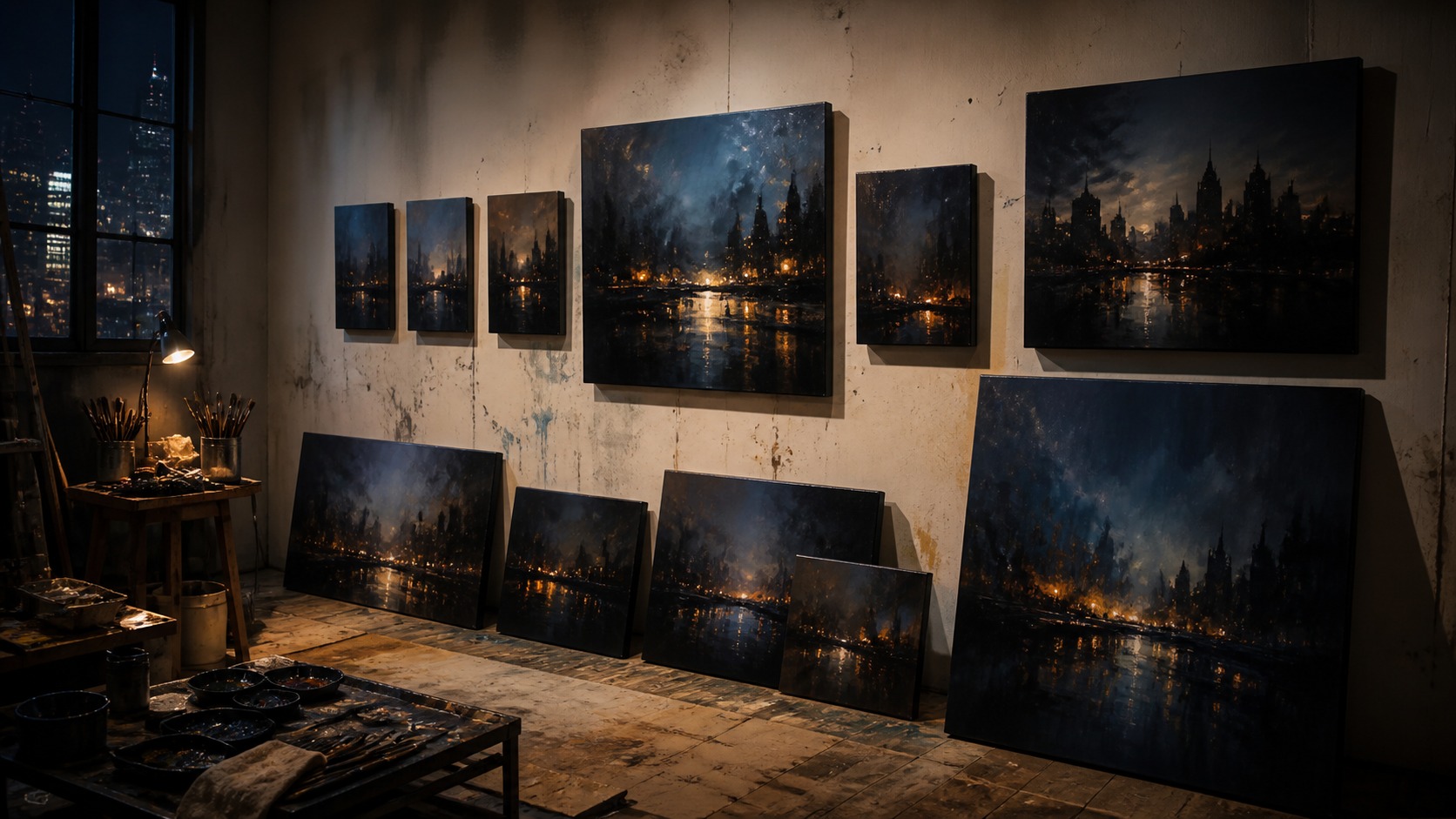
Size can signal importance or pacing. A larger canvas may become the emotional center, while smaller pieces can feel like memories, fragments, or pauses. Equal sizing creates order and calm. Mixed sizing creates movement when the hierarchy is clear.
Finish changes should be used carefully. Matte surfaces often support soft atmosphere, satin can add gentle presence, and gloss can intensify light but also create glare. A random finish shift can make one piece feel unrelated. Choose finish according to the series mood.
Edges deserve planning before printing. Gallery-wrap sides, mirrored edges, solid borders, or framed presentations can change how pieces relate on the wall. A series with close spacing may need especially consistent edge behavior. Small object details become noticeable when canvases hang together.
Proofing should happen as a group. A print that looks accurate alone may be too warm, too dark, or too sharp beside the rest. Review the whole sequence under the same lighting before approving final production. Series quality is relational.
Documentation helps future additions stay compatible. Record print sizes, finish, color notes, and installation spacing. If the series expands later, these details prevent accidental mismatches. A complete series can still grow when its rules are remembered.
Edition planning matters for collectors and print studios. If a series will be sold or reproduced, decide whether every piece shares the same dimensions, finish, and edition logic. Inconsistent production rules can make the series harder to understand. The market presentation should not confuse the artistic idea.
Edit the Series for Clarity
Editing turns abundance into meaning. Remove pieces that repeat an idea without adding a new angle. A beautiful canvas can still weaken the series if it steals focus or muddies the mood. Completeness often comes from subtraction.
Look for repeated roles. If three works all behave like anchors, none of them will feel fully important. If every canvas is quiet, the series may lack development. Role balance helps the group feel intentional.
Distance viewing is a useful test. Step back until details soften and ask whether the series still reads as one mood with movement inside it. If the group becomes a blur of sameness, increase variation. If it falls apart, strengthen the shared vocabulary.
Fresh eyes can catch drift. Ask someone to describe the mood without giving them the title. Their words do not need to match yours exactly, but they should live in the same emotional neighborhood. Confused reactions usually reveal a weak link.
Final edits should protect the viewer's path. The series should offer entry, discovery, and a reason to stop where it stops. When every canvas has a role, the group feels finished. Completion is a feeling of enough.
One strong outlier may still belong. The question is whether it changes the series in a meaningful direction or simply interrupts it. Place it in several positions and watch how the surrounding works respond. A true turning point makes neighboring pieces more interesting.
Install the Series So the Mood Holds
Installation can make or break the series. Spacing, height, light, furniture, and surrounding wall color all affect whether the mood feels continuous. A series designed with subtle tone can be ruined by glare or harsh uneven lighting. Display decisions should serve the same atmosphere as the art.
Wall color is part of the emotional field. A cool gray wall may support an urban-night group, while a warm white may soften ocean or dream collections. Strong wall colors can work, but they should not compete with the canvases. The background should extend the mood rather than announce itself.
Lighting should reveal variation without breaking unity. If one canvas is much brighter than the others, it may become the accidental ending of the series. Even illumination is often safest, with slight emphasis only where the sequence calls for it. The viewer should follow the artwork, not the lamp pattern.
Spacing creates the tempo. Tighter spacing can make a series feel immersive, while wider spacing can make it contemplative. Use templates to test rhythm before committing. The air between canvases is part of the series language.
After installation, live with the sequence. A series that feels powerful in the first hour may reveal a weak order or distracting piece later. Small adjustments to spacing or placement can restore the intended flow. Complete does not mean untouchable.
Ultimately, a mood-based series succeeds when viewers feel transported. They may not identify every repeated device, but they sense a deliberate world unfolding across the wall. That quiet coherence is what turns a mood into a complete series. The collection becomes more than a set of compatible images.
Installation photos can become part of the evaluation. Seeing the series on a wall reveals whether scale, spacing, and finish support the intended mood. A floor layout can only answer so much. Complete series thinking includes the final environment.
Artist statements can help clarify intent, but the canvases should not depend on them. Viewers may read the statement later; first they meet the work through color, scale, and sequence. If the series only connects through explanation, the visual logic needs strengthening. Mood should be legible before language arrives.