LED Usually Wins for Canvas, but the Details Still Matter
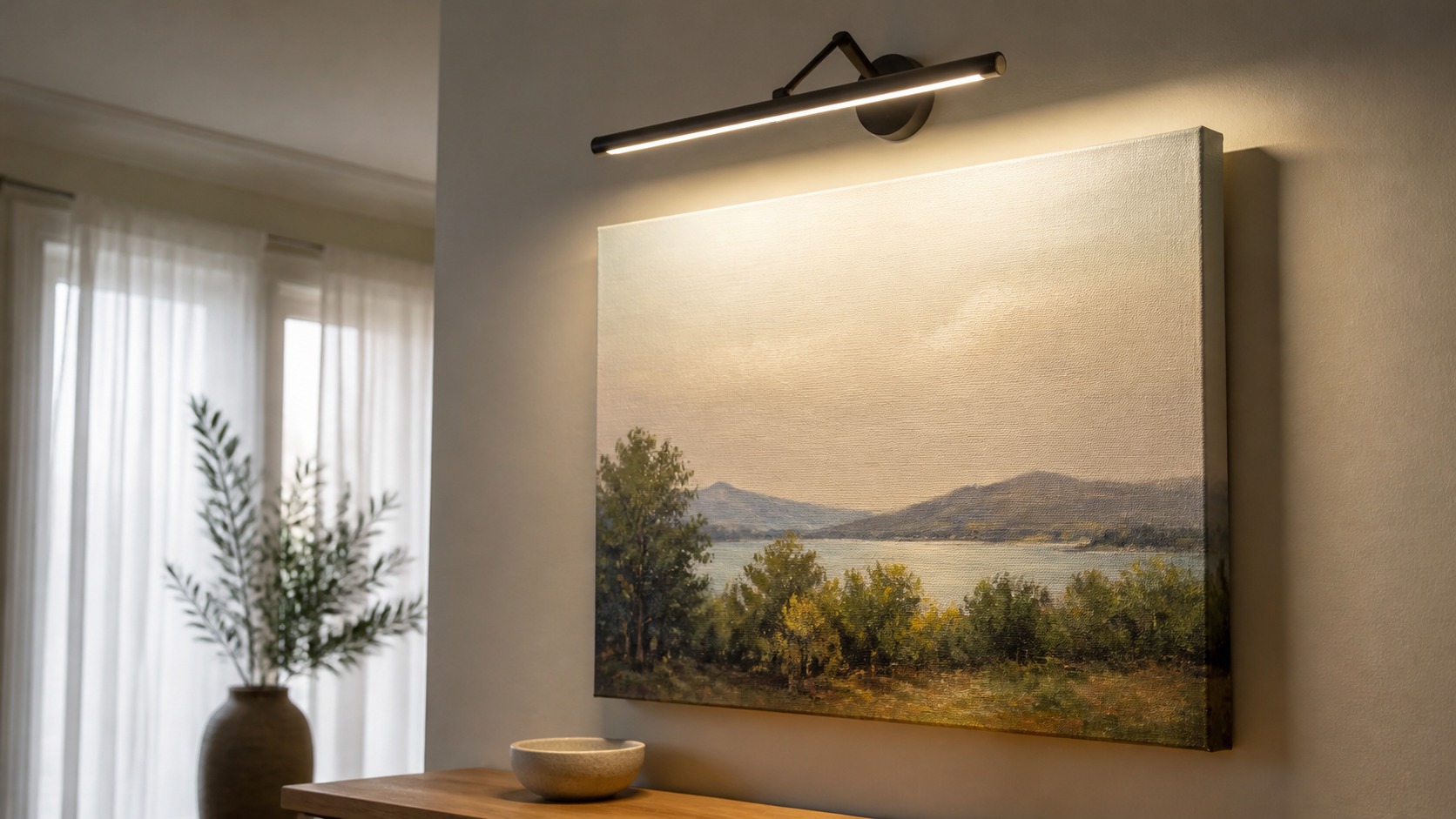
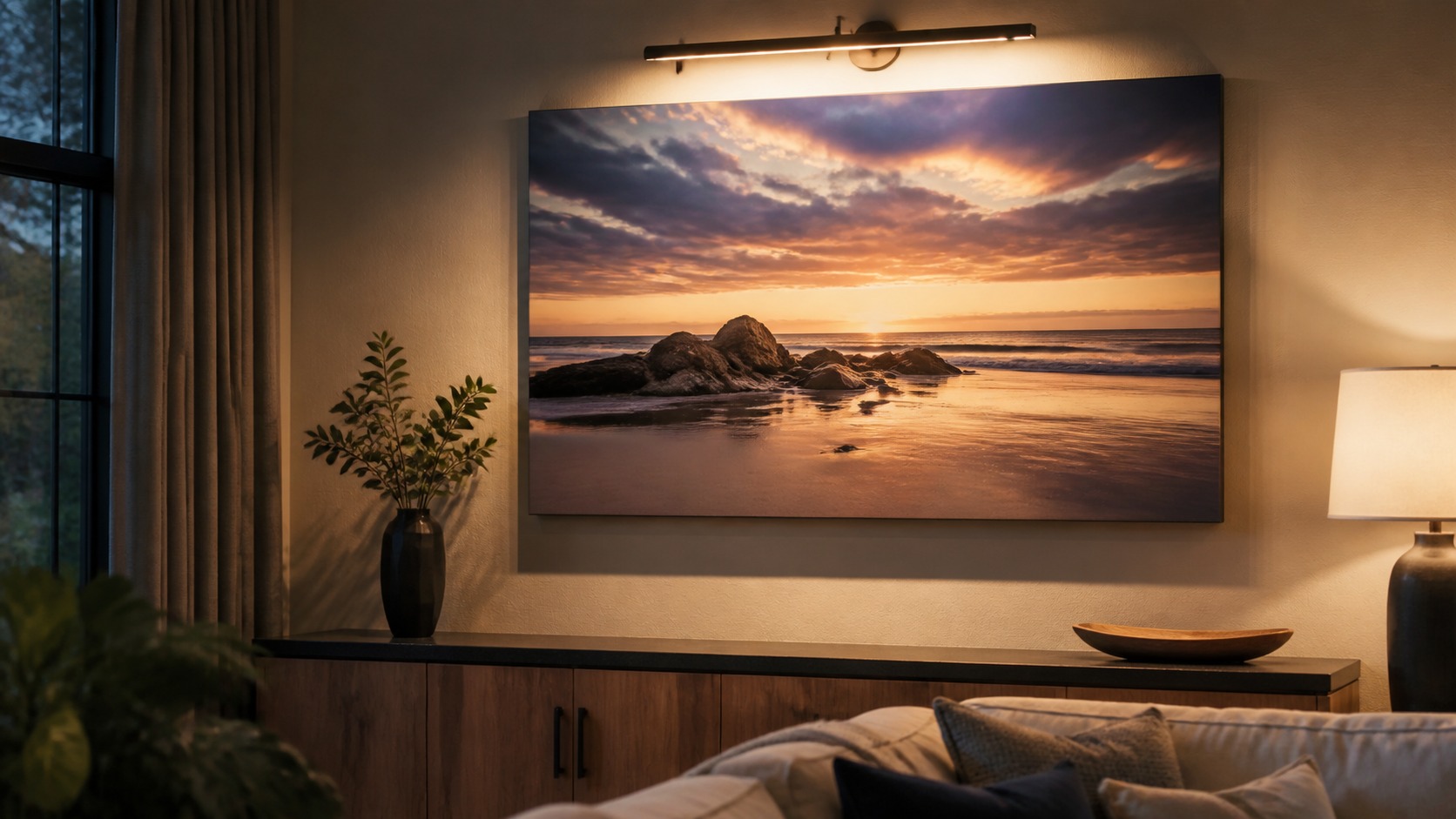
LED and halogen lights can both make canvas artwork look dramatic, but they treat the print very differently. Halogen produces a warm, familiar glow with strong punch, yet it also creates more heat and can be harder to manage near printed fabric. LED lighting is cooler, more efficient, easier to dim, and now available with excellent color rendering. For most canvas displays, LED is the better everyday choice, but the right answer still depends on fixture quality, color temperature, beam angle, and the artwork's surface finish.
A: LED is usually safer because it produces less heat.
A: It can look warm and rich, but it brings heat and color-shift tradeoffs.
A: Yes, if the color temperature is too cool or the bulb quality is poor.
A: Choose high color rendering, dimming, and a warm-neutral tone for most homes.
A: Often, because it can be intense, but aim matters for both types.
A: Use caution, distance, shorter run times, or consider an LED retrofit.
A: No. Direct sun and total exposure still matter.
A: Yes, if they spread evenly and render color well.
A: No. Prioritize even, accurate, low-glare illumination.
A: A good dimmable LED system is best for most canvas displays.
Heat Is the Biggest Difference
Halogen bulbs generate significant heat compared with modern LEDs. That warmth can be pleasant in a room, but it is not ideal close to canvas, ink, coating, or wooden stretcher bars. Over time, unnecessary heat can contribute to drying, surface stress, or uncomfortable display conditions. Canvas art does not need theatrical heat to look good.
LED fixtures produce much less heat at the artwork surface. That makes them easier to use above a canvas, inside a hallway, or in a room where lights stay on for hours. The cooler operation is one reason museums, galleries, and homes increasingly favor LED for art lighting. Lower heat does not remove every preservation concern, but it lowers one major risk.
For galleries or sellers, LED consistency is a major advantage. Similar fixtures can be matched across multiple walls, dimmed for events, and adjusted when artwork changes. Halogen can create beautiful moments, but LED is easier to control across a whole display plan. That practicality is part of why it has become the standard.
The final decision should include maintenance. A bulb that lasts longer and uses less energy keeps the display more stable. Frequent bulb replacement near canvas risks bumps, dust, and accidental contact. LED reduces those small hazards while giving the art a reliable everyday presentation.
Color Rendering Decides Whether LED Looks Good
Older LED lighting earned a reputation for cold, flat color, but current high-quality LEDs can render artwork beautifully. The key is choosing bulbs or fixtures with strong color rendering rather than the cheapest available option. Canvas prints rely on subtle relationships between pigment, texture, and finish. Poor LED color can make those relationships feel lifeless.
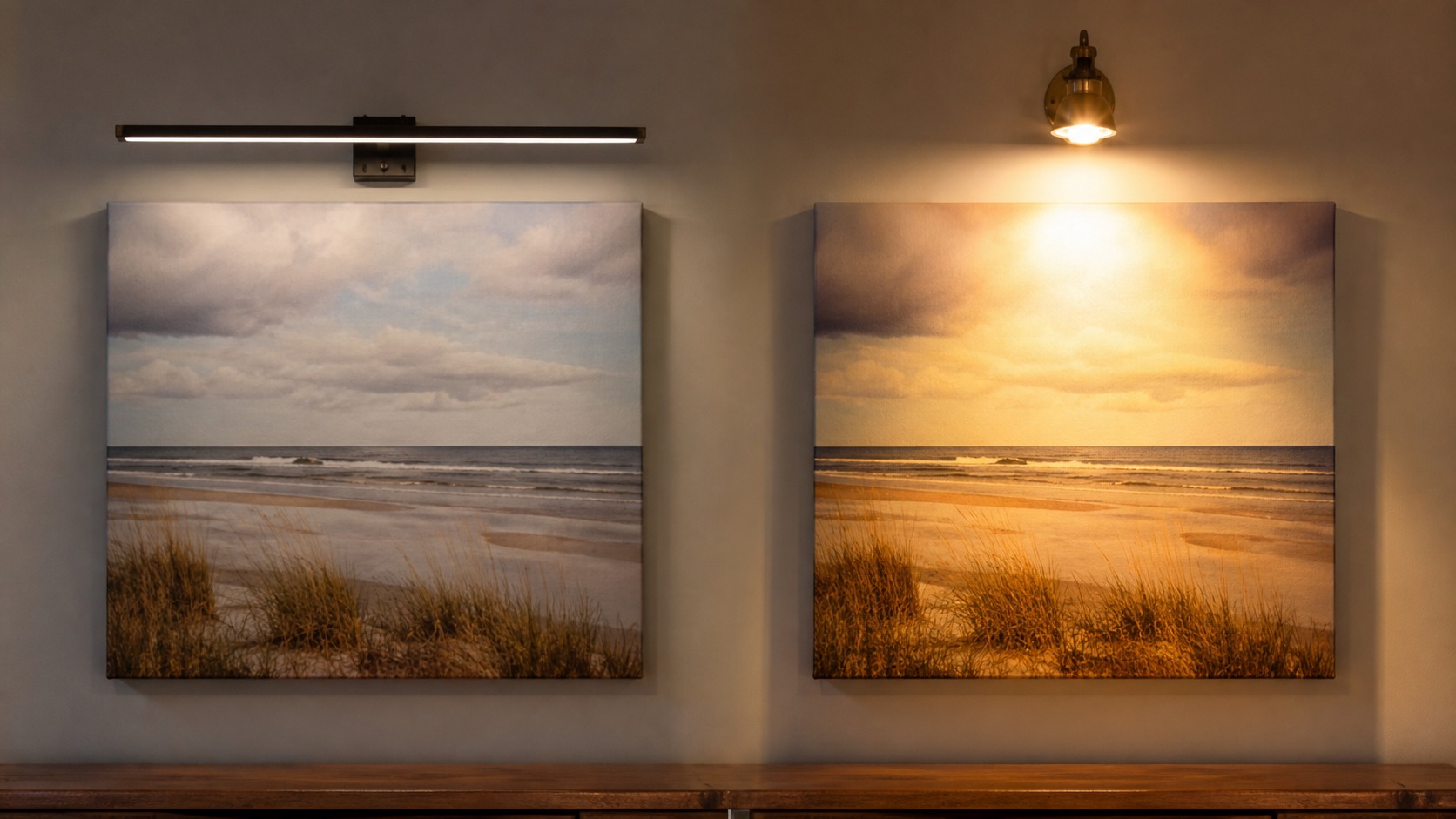
Halogen naturally has a warm continuous spectrum that many people find flattering. It can make traditional interiors, portraits, and warm landscapes feel rich. The downside is that it can push blues and neutrals toward yellow and create more glare through intensity. Warmth is attractive only when it serves the artwork.
A good LED lets you choose color temperature more deliberately. Warm-neutral options can keep the comfort people like in halogen while avoiding excessive heat. For most homes, that control is more useful than nostalgia for older bulbs.
Halogen can still be useful for a very specific mood, especially in traditional rooms with warm wood and evening use. The risk is treating that warmth as inherently better for art. Some canvas prints need neutral clarity more than amber glow. A coastal photograph, blue abstract, or black-and-white piece may lose accuracy under strong warmth.
LED quality varies dramatically. A premium LED fixture with excellent color rendering is not the same as a bargain bulb with a strange tint. When people dislike LED art lighting, they are often reacting to poor product choice rather than the technology itself. Selection matters.
The fixture body also contributes to performance. A well-designed LED picture light spreads illumination, manages heat, and hides the source from direct view. A poor fixture can glare, flicker, or create stripes across the canvas. The bulb type is only one part of the display system.
For valuable canvas prints, the conservative choice is clear. Use LED first, then tune color temperature and brightness until the room feels right. Halogen should be used only when its visual character is essential and its heat can be controlled. Most homes do not need that tradeoff.
A side-by-side test is often decisive. Place the artwork under each light for a few minutes, then look from normal seating distance. The better light will preserve color, avoid glare, and keep the canvas comfortable. In most modern setups, that will be the LED.
Beam Control and Dimming Favor LED
LED fixtures are often easier to dim and aim precisely. That matters because canvas displays need subtlety more than raw brightness. A dimmable LED picture light can be tuned for evening, daylight, and room mood without forcing the art into one fixed intensity. Halogen can dim too, but it still carries heat and energy drawbacks.
Beam spread is another factor. Large canvas prints need broad, even light, while small pieces can handle tighter accenting. Modern LED bars, track heads, and wall washers offer many beam options. The best fixture lights the artwork evenly and quietly rather than creating a hot center.
Glare Is a Fixture Problem, Not Only a Bulb Problem
Either LED or halogen can glare if aimed poorly. Canvas with a satin or protective coating may reflect a bright source from certain viewing angles. Halogen's intensity can make glare feel harsher, but a badly placed LED can still create a distracting streak. Angle, distance, beam width, and finish must work together.
The easiest test is to sit where the art is normally viewed. If the light source reflects across the canvas, adjust the fixture before changing the bulb type. Many glare problems disappear with a small change in aim. The best lighting choice still needs correct installation.
A final review should happen with the artwork upright, installed height in mind, and the main room lights set as they will normally be used. Flat-table decisions can miss glare, uneven brightness, and the way texture reads from a doorway. Looking at the canvas in its real viewing posture makes the guidance practical.
The owner should also decide what kind of aging risk is acceptable. A replaceable decorative print can live with more exposure than a commissioned portrait or limited edition. Matching caution to meaning keeps preservation realistic instead of rigid.
Small changes often solve the biggest problems. Moving a canvas a few feet, lowering a dimmer, adding a sheer curtain, or choosing a calmer finish can protect the artwork without changing the room's personality. The best protection usually feels like design common sense.
When in doubt, reduce intensity before adding more products. Canvas prints benefit from gentle, even, controlled conditions. Stronger light, heavier coating, or brighter placement can create new issues if the original problem was simply harsh exposure.
The point is not to make the artwork untouchable. It is to let the canvas stay beautiful in ordinary life. A print that can be seen, enjoyed, dusted gently, and kept away from the harshest conditions is far more likely to age with grace.
A sample or short-term test can prevent a long-term mistake. Let the lighting, coating, or placement choice sit for an evening before deciding it is finished. Canvas surfaces often reveal glare, warmth, or dullness only after the room is used normally.
It is also worth thinking about replacement difficulty. If the image can be reordered easily, the risk is different from a one-time commission or a family piece. The harder the print is to replace, the more conservative the display plan should be.
Good canvas care is usually quiet. The best choices do not call attention to themselves, but they keep color, texture, and structure from being pushed too hard. That quiet discipline is what lets the artwork keep looking intentional year after year.
For lighting decisions specifically, compare the canvas after the room has been occupied for a while. A light that seemed perfect during installation may feel too hot, too yellow, or too reflective during normal use. Everyday comfort is part of display quality.
That real-use check often makes the better choice obvious and easier to maintain over time afterward too.
Energy, Maintenance, and Long-Term Use
LED lighting is much more efficient than halogen, which matters in rooms where art lights stay on for hours. Lower energy use also means less waste heat in the room. LEDs usually last longer, reducing the need to climb up and replace bulbs near artwork. That practical convenience supports preservation because the display can remain consistent.
Halogen may still appeal in specific decorative fixtures or historic interiors. If used, it should be placed with extra distance, shorter operating time, and careful attention to heat. For valuable or sentimental canvas prints, halogen should be the exception rather than the default. The risk-to-benefit balance is rarely better than a high-quality LED.
The Best Choice for Most Canvas Displays
For most homes, a high-CRI, dimmable LED fixture with warm-neutral color temperature is the best choice. It gives the canvas attractive illumination while reducing heat, energy use, and maintenance. The fixture should be aimed gently from above, spread evenly across the artwork, and checked from normal viewing positions. Those details matter more than simply saying LED is better.
Halogen can still produce a beautiful glow, but beauty alone is not enough for long-term art display. Canvas prints need light that flatters and behaves. LED offers more control with fewer preservation compromises. That makes it the practical winner for most canvas walls.
The final decision should be made with the actual artwork in place. A cool abstract, warm landscape, black-and-white photograph, and textured reproduction may each prefer a slightly different LED setting. Choose the system that lets you tune the room without putting the canvas under stress.
The comparison becomes clearer when the lights run for several hours. Halogen may look appealing at first glance, but the warmth around the fixture and wall can become more obvious with time. LED lighting stays more comfortable in daily use. That difference matters in hallways, living rooms, and hospitality spaces where art lighting may stay on long after sunset.
LED also gives homeowners more fixture choices. Slim bars, small track heads, wall washers, and adjustable picture lights can all use efficient LED sources. That variety makes it easier to fit the lighting to the canvas instead of forcing the canvas to tolerate an old fixture. Better fit usually means less glare and more even color.
Halogen's strongest argument is atmosphere. Its warm glow can make a room feel intimate and traditional. If that look is important, a warm-neutral LED can often approximate the mood without the same heat burden. The goal is to preserve the emotional quality of the room while reducing stress on the artwork.
Energy use is not only a utility-bill issue. A fixture that uses less power and creates less heat can stay on longer without making the room uncomfortable. That matters for canvas art because long display hours are common in living rooms, restaurants, and hallways. LED handles that everyday use more gracefully.
The practical answer is to choose preservation habits that still let the room feel alive. Canvas art should be protected, but it should also remain visible, enjoyable, and connected to daily life. A careful balance of material, placement, finish, and lighting gives the print the best chance to keep its presence over time.