Safe Canvas Lighting Balances Beauty with Preservation
Lighting canvas wall art well is a little different from lighting a framed poster or a glossy photograph. Canvas has texture, coatings, pigments, and stretched fabric edges that respond visibly to heat, glare, ultraviolet exposure, and fixture angle. The goal is not simply to make the artwork brighter; it is to reveal color and surface without aging the print faster or flattening the texture that makes canvas appealing. A good home lighting plan lets the piece glow in the room while keeping the materials comfortable, stable, and protected.
A: Yes, especially through heat, direct sun, and long intense exposure.
A: Quality LEDs are usually a safer low-heat choice for home display.
A: Far enough to spread light evenly without warming or streaking the surface.
A: Fixture angle, finish sheen, windows, and viewing position all contribute.
A: Indirect daylight is fine; repeated direct sun is the concern.
A: They reduce unnecessary brightness and make evening display more flexible.
A: It can exaggerate ridges if the angle is too steep or harsh.
A: Warm-neutral with high color rendering works for many homes.
A: No. Gentle dry dusting is safer than aggressive cleaning.
A: The art looks rich without glare, heat, or a distracting fixture.
Use Low-Heat Light as the Starting Point
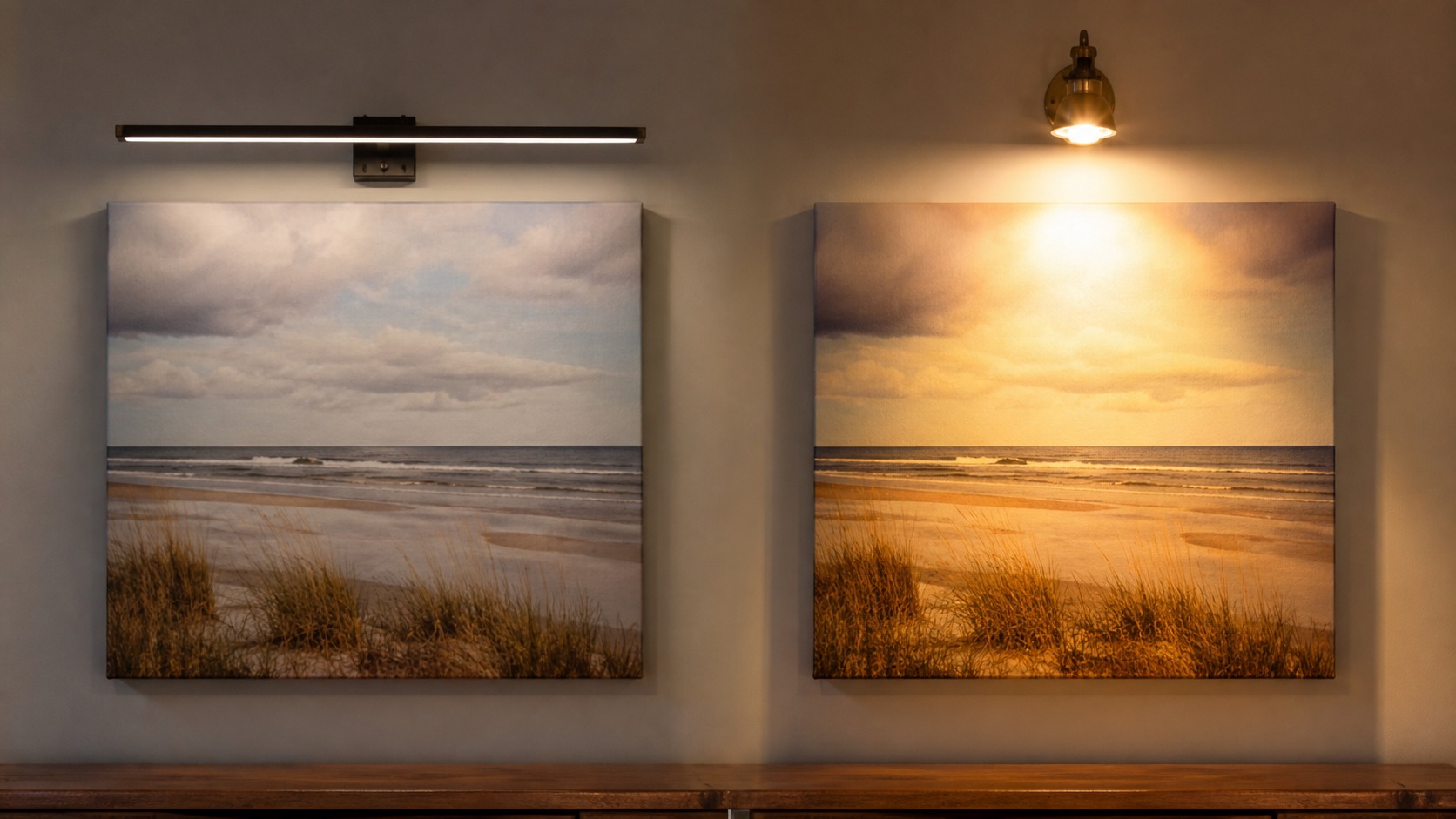
Heat is one of the quiet risks in art display. A light source that feels pleasant in the room can still warm the surface of a canvas if it sits too close or runs for long periods. That heat can stress coatings, dry out fabric, and make the stretched surface less stable over time. Low-heat LED fixtures are usually the safest starting point because they provide controllable illumination without the warmth associated with older bulbs.
Distance matters as much as bulb type. Even an efficient fixture should not sit directly against the canvas face or concentrate light in one small area. A picture light, track head, or wall washer should spread illumination evenly and leave enough room for air to move. If the top edge looks noticeably brighter or warmer than the rest, the fixture needs adjustment.
Touch should never be the test while the light is on, but the room can tell you a lot. If the wall area near the print feels hot, or if the artwork only looks good under intense brightness, the lighting plan is working too hard. Safer light feels comfortable and steady rather than aggressive.
The artwork's subject should guide how much texture the light reveals. A mountain landscape may benefit from visible surface tooth, while a smooth portrait may look better under softer, broader light. Lighting is not separate from the image. It becomes part of how the viewer reads the final print.
For valuable canvas prints, write down the bulb type, fixture placement, and dimmer setting once the display works. That record makes it easier to replace bulbs or adjust the room later without losing the balance. Preservation often depends on remembering the simple choices that worked.
Angle the Beam to Reveal Texture Without Glare
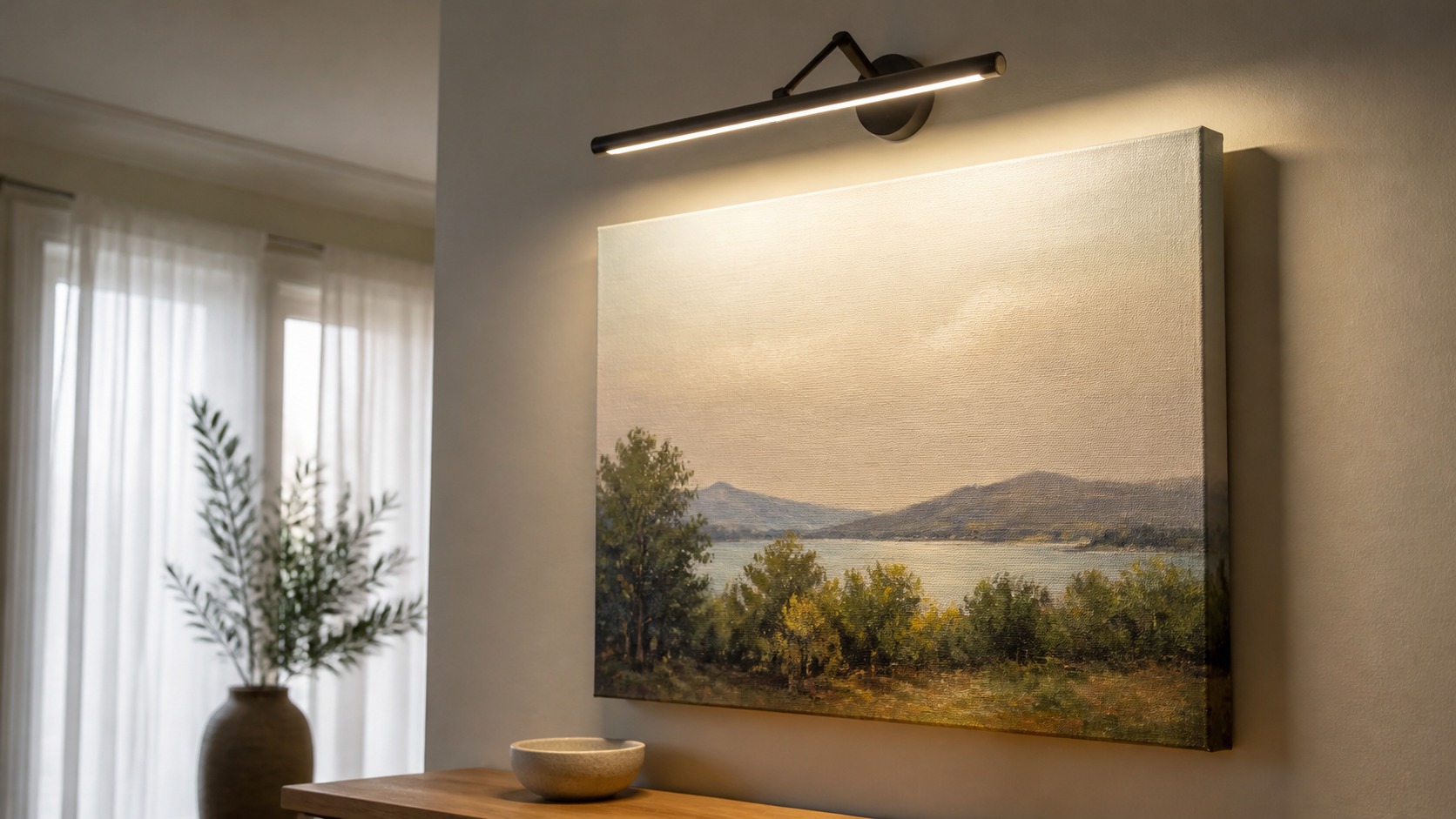
Canvas texture becomes attractive when light grazes it gently. A slight angle from above can reveal the weave and give the print depth, especially on landscapes, painterly reproductions, and abstract work. Too much angle creates small shadows across the surface, while direct frontal light can flatten the print and cause reflections. The sweet spot is usually found by small adjustments rather than by buying a stronger fixture.
Stand where people actually view the art before judging the angle. A fixture may look fine from below but reflect badly from the sofa or hallway entrance. Move around the room and watch the surface sheen shift. If a bright streak follows your eye, redirect the light before increasing or decreasing brightness.
Large canvases need wider coverage. A narrow beam can make the upper center of a piece look lively while the lower corners feel dull. For oversized wall art, a wider picture light or two carefully aimed sources may protect the image better than one intense spotlight.
Hardware should be installed with future adjustment in mind. A fixed fixture that cannot tilt or dim may work for one canvas and fail for the next. Aimable heads, adjustable picture lights, and dimmers give the homeowner room to respond as art, furniture, and daylight change. Flexibility is a preservation feature because it prevents over-lighting.
Texture also behaves differently by subject. A landscape with water, stone, and foliage may welcome visible weave, while a minimal portrait may need gentler light. If the canvas surface starts competing with the subject, soften the angle or broaden the beam. The viewer should sense material quality without being distracted by ridges.
Do not forget the side edges. Gallery-wrapped canvas has depth, and angled light can create shadows along the side if the fixture is too close or too narrow. A clean edge shadow can look elegant, but a harsh one makes the installation feel accidental. Checking the side view helps the canvas read as a finished object.
For renters or temporary displays, plug-in picture lights and carefully placed lamps can still work. The same rules apply: low heat, good color rendering, soft angle, and no direct sun. A permanent gallery system is not required to treat canvas art well. Thoughtful restraint beats expensive equipment used badly.
The safest setup is the one people will actually use. If the controls are awkward, the light may stay too bright or remain off entirely. Simple switches, dimmers, and stable placement make preservation habits easier. Good lighting design should reduce friction, not create a daily chore.
Choose Color Temperature for the Artwork and Room
Bulb warmth changes how canvas color feels. Warm light can make portraits, sunset scenes, and traditional interiors feel inviting, but it can also push whites and blues toward yellow. Cooler light may preserve crisp blues and grays, but it can make a living room feel clinical. For most homes, a warm-neutral LED is a practical middle ground.
Color rendering is just as important as color temperature. Cheap bulbs can make reds, greens, and skin tones look flat even when the brightness seems adequate. High color rendering helps the artwork keep its intended palette under artificial light. That matters for canvas because fabric texture already softens some detail; poor light should not steal color too.
Test the bulb with the actual print rather than relying on packaging language. A floral canvas, black-and-white photograph, coastal scene, and bold abstract will react differently to the same lamp. The right bulb is the one that keeps the artwork believable inside the room.
Control Daylight Before It Controls the Print
Natural light can be beautiful, but direct sun is hard on printed artwork. Canvas near a window may look lively during the day and slowly lose color if it receives repeated harsh exposure. Sheer curtains, blinds, UV-filtering film, and thoughtful placement can keep the room bright without letting sunlight punish the print. The best daylight is softened and indirect.
Watch the wall at different times of day. A safe-looking corner in the morning may receive a strong beam in late afternoon. Seasonal sun paths also change the risk, especially in rooms with large windows. Before hanging a valuable canvas, notice where light actually lands across a full day.
If the artwork must hang near daylight, choose protective measures together. A UV-resistant coating helps, but it should not be the only defense. Filtered windows, gentle artificial light, and reasonable placement work together better than any single product.
A final review should happen with the artwork upright, installed height in mind, and the main room lights set as they will normally be used. Flat-table decisions can miss glare, uneven brightness, and the way texture reads from a doorway. Looking at the canvas in its real viewing posture makes the guidance practical.
The owner should also decide what kind of aging risk is acceptable. A replaceable decorative print can live with more exposure than a commissioned portrait or limited edition. Matching caution to meaning keeps preservation realistic instead of rigid.
Small changes often solve the biggest problems. Moving a canvas a few feet, lowering a dimmer, adding a sheer curtain, or choosing a calmer finish can protect the artwork without changing the room's personality. The best protection usually feels like design common sense.
When in doubt, reduce intensity before adding more products. Canvas prints benefit from gentle, even, controlled conditions. Stronger light, heavier coating, or brighter placement can create new issues if the original problem was simply harsh exposure.
The point is not to make the artwork untouchable. It is to let the canvas stay beautiful in ordinary life. A print that can be seen, enjoyed, dusted gently, and kept away from the harshest conditions is far more likely to age with grace.
A sample or short-term test can prevent a long-term mistake. Let the lighting, coating, or placement choice sit for an evening before deciding it is finished. Canvas surfaces often reveal glare, warmth, or dullness only after the room is used normally.
Avoid Cleaning and Texture Problems Caused by Fixtures
Lighting can reveal surface dust, fingerprints, and uneven coatings. That visibility is useful, but it can tempt people to clean canvas too aggressively. A soft dry cloth is usually safer than sprays, moisture, or scrubbing, especially on textured surfaces. Good lighting should not create a maintenance routine that damages the print.
Fixture placement can also affect dust patterns. Lights mounted very close to the wall may warm the area slightly and encourage visible buildup along the top edge. Keeping fixtures clean and positioned with breathing room helps the artwork stay presentable. A canvas should be lit as an art object, not treated like a shelf accessory.
Build a Lighting Plan That Can Be Adjusted
The best canvas lighting is adjustable because rooms change. Furniture moves, curtains change, seasons shift, and the artwork may be replaced by a darker or lighter piece later. Dimmers, aimable fixtures, and layered lamps let the display adapt without starting over. That flexibility protects both the current canvas and the room's future design.
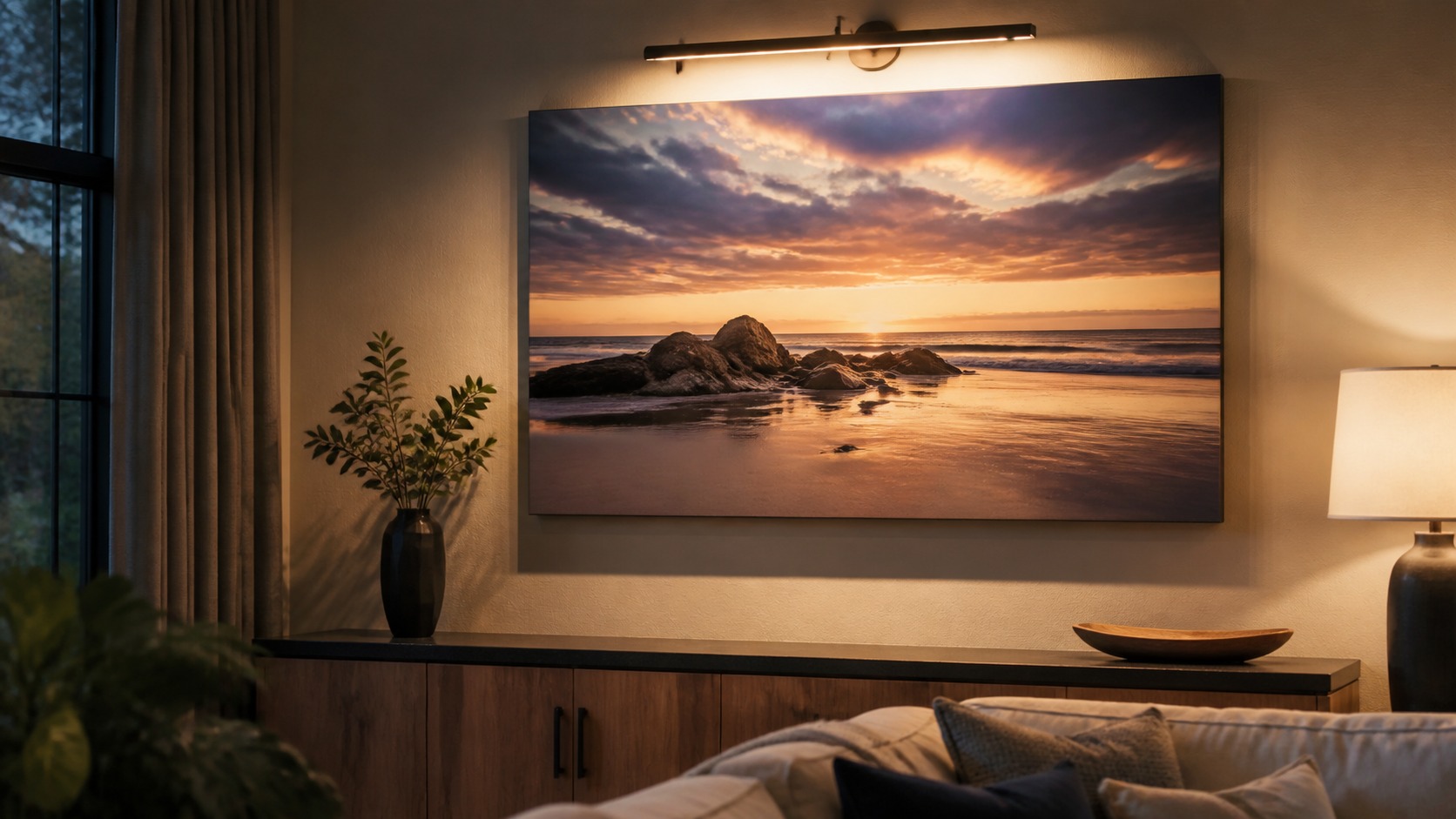
Layered lighting usually feels more natural than one bright art light. Ambient light gives the room comfort, accent light gives the canvas presence, and nearby lamps soften contrast. When those layers work together, the artwork pops without looking staged. It feels integrated into the home.
Safe lighting is successful when nobody thinks about the equipment. The colors look alive, the texture has quiet depth, and the surface is free from distracting glare or heat. That balance is what lets canvas wall art remain beautiful beyond the first week of installation.
A safe lighting plan should also respect the print's finish. Matte canvas hides reflections more easily, while satin or low-gloss coatings can catch a fixture from across the room. Before changing bulbs, look at the surface from several angles. The fix may be a lower aim, wider spread, or dimmer setting rather than a different artwork or stronger light.
Rooms with multiple artworks need consistency. If one canvas is lit warmly and another with a cooler bulb, the wall can feel unsettled even when each piece looks acceptable alone. Matching fixture quality and color temperature across a grouping helps the art feel curated. It also makes fading or surface changes easier to notice over time.
Installation height affects preservation too. A fixture mounted too close to the top edge can concentrate light and heat on a narrow strip. A better setup spreads illumination from a comfortable distance. That small adjustment protects the canvas and usually looks more professional.
Wall color can change how safe lighting appears. A deep painted wall may make a modest light feel dramatic, while a pale wall can bounce brightness back across the canvas. Before increasing wattage, consider whether the surrounding wall is already helping or hurting the artwork. The best lighting often uses the room's surfaces instead of overpowering them.