Drama Comes from Deciding What the Light Reveals
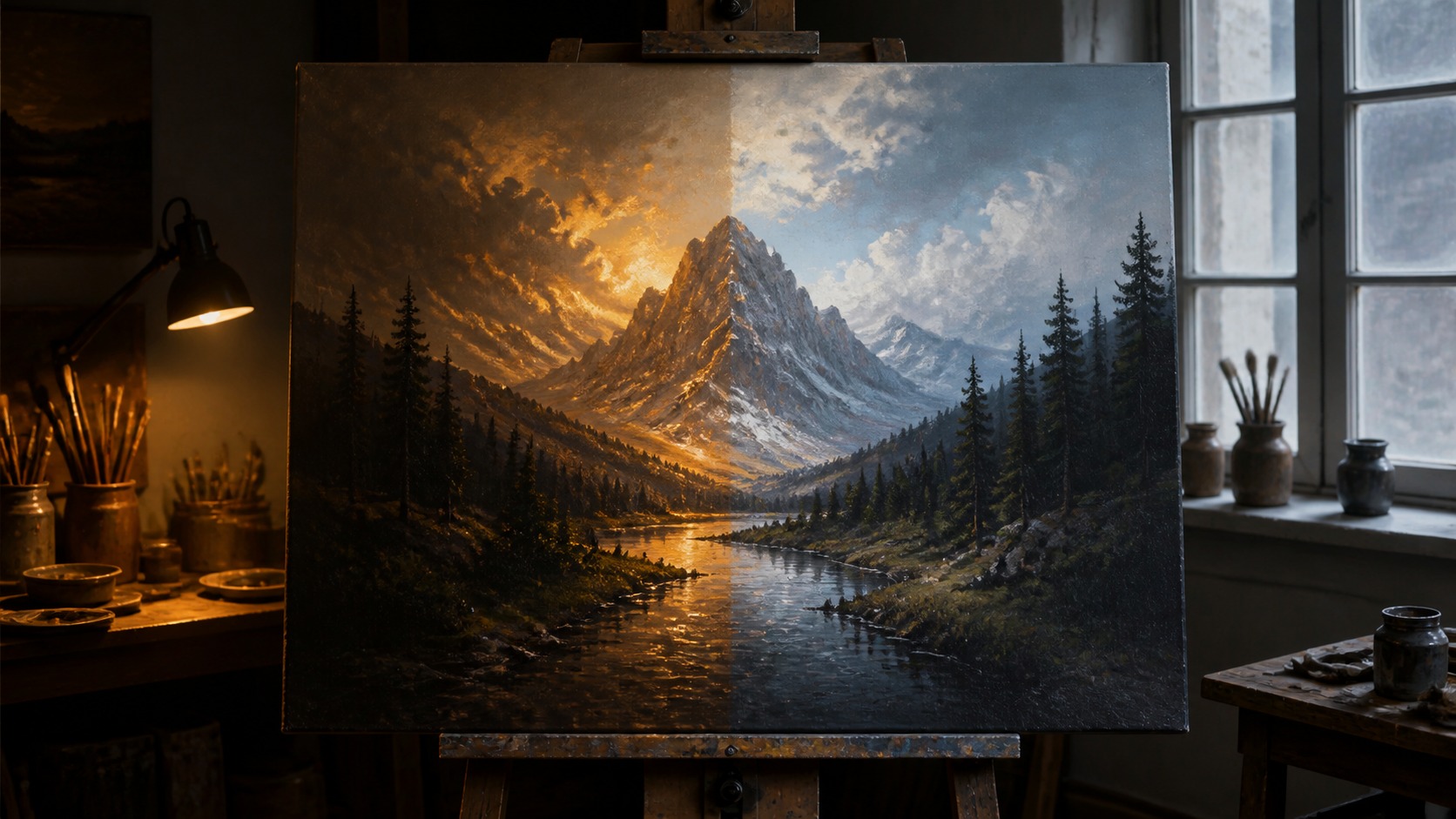
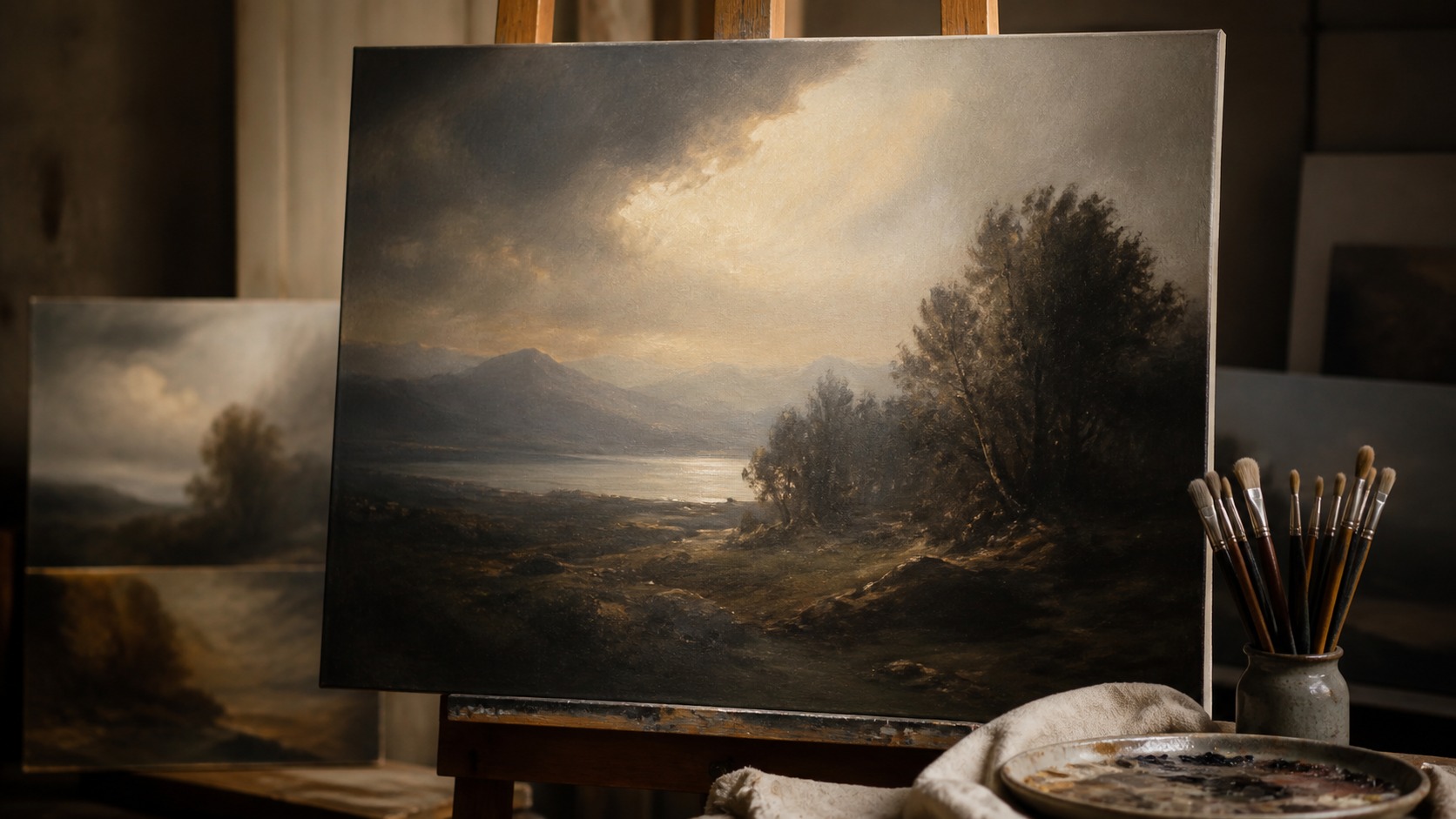
Light and shadow create dramatic artwork by controlling what the viewer sees first, what remains mysterious, and how much emotional pressure the scene holds. Drama is not simply making everything dark; it is choosing a clear light source, shaping value contrast, protecting focal points, and letting shadow support the story. Whether the artwork is a still life, portrait, landscape, or abstract canvas, the strongest drama comes from disciplined contrast rather than random darkness. The viewer should feel guided into the image, not abandoned in visual noise.
A: Not always; drama comes from value relationships, not black alone.
A: Usually near the focal point or emotional turning point.
A: Yes, but detail should not compete with the main light.
A: Start with one dominant source for clarity.
A: It is strong contrast between light and dark to create form and drama.
A: The value pattern may lack clear separation or midtone control.
A: Yes, especially when temperature supports value contrast.
A: No, lost and soft edges help atmosphere.
A: Squint or step back to see whether the light pattern reads.
A: Reveal intentionally and let shadow carry meaning.
Begin with One Believable Light Source
Clear dramatic artwork usually begins with one understandable light source. The source can be a window, candle, stage lamp, moon, doorway, spotlight, or imagined glow, but it should behave consistently enough for the viewer to trust it. When light direction is confused, drama becomes clutter. A believable source lets shadow feel intentional.
From that source, the image hierarchy begins to form. Objects nearest the light may receive attention first, while forms in shadow become supporting atmosphere. This creates order before detail is added. The viewer understands the scene because the light explains it.
Artists can exaggerate light for effect, but exaggeration works best when it starts from observation. Study how highlights fall, how edges soften, and how cast shadows stretch across surfaces. Real light gives imagination something to bend. Drama becomes stronger when it remains plausible.
Believable light sources help viewers imagine space beyond the canvas. If light seems to come from a doorway, lamp, or unseen window, the world feels larger than the painted area. That suggestion increases drama without adding more objects. The source becomes part of the story.
Subject matter should help determine the light source. A quiet still life, storm landscape, and theatrical interior each need a different kind of illumination to feel convincing. Dramatic light should emerge from the world of the artwork. A random spotlight can feel imposed.
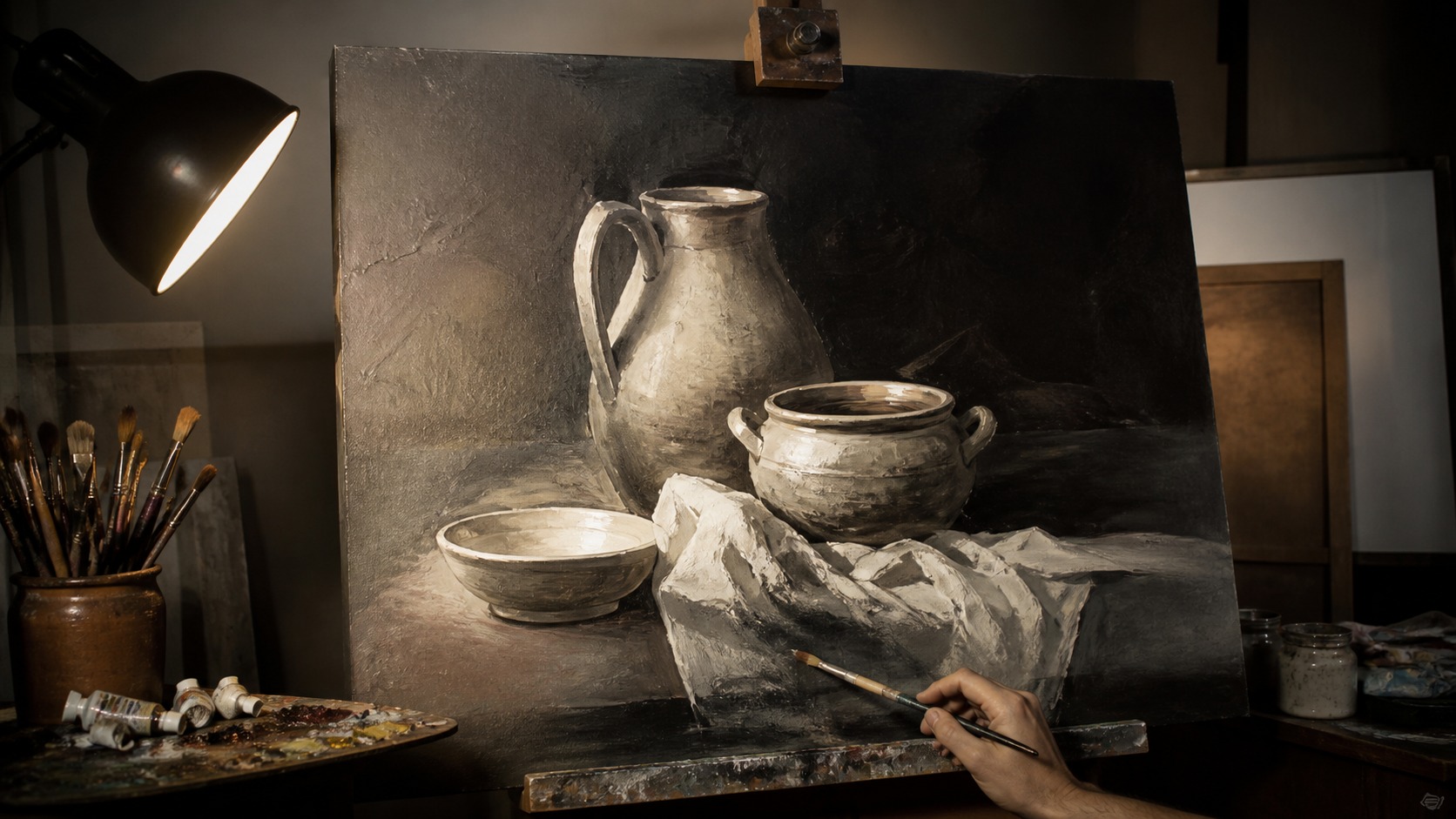
Emotional logic should guide the light source too. A ceramic vessel under a desk lamp, a landscape under storm light, and a doorway glowing in a dark room each suggest a different kind of tension. The source is not just illumination; it is narrative pressure. Choose it for meaning.
Build Value Contrast Around the Focal Point
Value contrast is the engine of dramatic artwork. A bright shape against a dark field attracts attention, while low-contrast areas recede. Place the strongest contrast near the focal point and keep secondary areas quieter. This prevents the whole canvas from shouting at once.
Deep black does not need to appear everywhere. If every corner is black and every highlight is bright, the image loses nuance. Reserve the deepest shadow and brightest light for moments that matter. Drama depends on scarcity.
Midtones are the bridge between light and dark. They keep the artwork from feeling harsh or cut out. A rich middle range lets the viewer move through the scene gradually. Without midtones, contrast can look graphic but shallow.
Squinting is a useful test. If the main value pattern reads clearly with details blurred, the dramatic structure is probably working. If everything merges or competes, simplify before adding texture. Strong drama begins as a readable value design.
Value planning should happen early, before color complexity takes over. Many dramatic paintings weaken because beautiful colors distract from a confused light pattern. A monochrome sketch or digital value study can clarify the structure. Once the value design works, color has a stronger foundation.
Thumbnail value studies can save hours of repainting. Reduce the idea to a small pattern of dark, middle, and light shapes before committing to detail. If the thumbnail has force, the larger artwork has a structure to grow from. If it fails, more detail will not rescue it.
Early value studies should ignore surface detail. Divide the idea into a few large shapes and decide which ones carry attention. If those shapes are weak, the finished painting will rely on decoration. Strong drama can usually be read in a thumbnail.
Use Shadow as Shape, Not Empty Space
Purposeful shadow has design, weight, and a job in the picture. It can frame the subject, hide distracting detail, create depth, or suggest something outside the visible scene. Treat shadow as an active shape rather than leftover darkness. The viewer feels drama when shadow participates.
Within shadow, edges still matter. Some edges should disappear softly, while others should remain just visible enough to imply form. This lost-and-found edge quality creates atmosphere. A shadow with no internal variation can feel flat.
Cast shadows can create movement. A long shadow across a floor, table, wall, or landscape can point toward the focal point or create tension. The shape of the shadow may be as important as the object casting it. Dramatic art often lets shadows do compositional work.
Dark shapes can create rhythm across the surface. A repeated diagonal, curve, or block of darkness can move the eye as powerfully as a bright object. This keeps the composition active even in quiet areas. Shadow should have design intelligence.
Choose shadow color early. A warm brown shadow, cool blue shadow, and neutral gray shadow each carry a different emotional weight. Choosing shadow color by habit can weaken the drama. The dark areas deserve as much intention as the illuminated ones.
Soft shadows can be dramatic too. Not every shadow needs a hard edge or theatrical blackness. A gradual falloff can create suspense, tenderness, or quiet unease. Drama comes from control, not from using the harshest possible contrast.
Let Highlights Earn Their Power
Sparing highlights are usually the strongest ones. A small bright edge, reflected glint, or illuminated face can carry more drama than a canvas full of brightness. The highlight tells the viewer where emotional attention belongs. Too many highlights scatter that attention.
Highlight temperature can change mood. A warm highlight in a cool shadow feels intimate or urgent, while a cool highlight in warm darkness can feel eerie or distant. Color temperature adds emotional complexity to value contrast. Drama becomes richer when light has character.
Hard highlights need soft support. If every edge around a highlight is sharp, the artwork can feel brittle. Soft surrounding transitions make the bright moment feel more luminous. Light shines more convincingly when the surrounding dark has air.
Bright accents should match the material they describe. Ceramic, fabric, water, skin, and metal all catch light differently, so a universal bright mark can feel false. Observing material behavior makes dramatic light more convincing. Drama improves when highlights are specific.
Texture can also be implied through highlights. A soft highlight on fabric, a hard edge on ceramic, or a broken mark on rough paint tells the viewer what kind of surface is present. Specific highlights make drama believable. Generic brightness feels decorative.
Place highlights after the dark structure is convincing. If bright accents are added too early, they may disguise a weak composition instead of strengthening it. Build the stage first, then decide where the spotlight belongs. That sequence keeps drama organized.
Around highlights, edges need special care. A hard edge can make light feel sharp and immediate, while a softened edge can make it glow. Mixing both gives drama more sophistication. The viewer feels the quality of light through edges.
Create Depth with Layers of Darkness
Many dramatic paintings fail when all shadows are the same darkness. Foreground, middle ground, and background need different shadow values so space remains readable. Layered darkness gives the viewer somewhere to travel. Flat darkness stops the eye.
Atmospheric shadow can push distant forms back. Cooler, softer, lower-contrast darks may feel farther away, while sharper, warmer darks can feel nearer. This is useful in landscapes and interiors alike. Shadow is a spatial tool as well as a mood tool.
Texture should fade as shadow deepens. A few selected strokes or surface details can be beautiful, but too much detail in darkness can fight the focal area. Let some information disappear. Mystery is one of shadow's gifts.
Small reflected light can keep shadow alive. A dark object rarely goes completely flat in a real scene; nearby surfaces bounce small amounts of light back into it. Including subtle reflected light makes drama more believable. The shadow breathes without losing its depth.
Overlap also creates depth. A shadow crossing behind one object and in front of another can clarify spatial layers. These relationships make the scene feel constructed rather than merely darkened. The viewer believes the space because shadows connect it.
Purposeful shadow overlap makes depth stronger. One cast shadow can connect objects, another can divide space, and another can lead the eye toward the subject. These layers create a stage for the focal point. Drama is built by relationships.
Reflected light is one of the best ways to keep deep shadow believable. A tiny lift in value can show that form still exists inside darkness. This makes the painting richer and prevents the shadow from becoming a flat cutout. Mystery works better when it contains hints.
Choose background values with care. A background that is too bright can steal power from the subject, while one that is too flat can make the scene feel shallow. Small shifts behind the focal area can create depth without noise. Drama often depends on quiet background decisions.
Keep Drama Clear, Not Merely Dark
Maximum darkness is not the goal. The goal is to make the viewer feel directed, intrigued, and emotionally engaged. Clear value structure, purposeful shadows, and selective highlights create that effect. Darkness without organization is just obscurity.
Review the artwork from a distance. If the major light and shadow pattern reads before the details, the drama is likely strong. If the viewer has to search for the subject, the contrast may need rebalancing. Drama should invite attention, not punish it.
Memorable dramatic artwork leaves room for imagination. It reveals enough to guide the viewer and hides enough to keep the image alive. That balance is why light and shadow remain such powerful tools. They turn a canvas into an event.
Rest areas still belong in dramatic art. Quiet passages let the viewer recover from high contrast and make the focal point feel stronger. If every inch demands attention, the drama becomes exhausting. Silence on the canvas makes intensity more powerful.
Before calling the piece finished, review it under different room lighting. A dramatic canvas that works under studio light may lose key shadow detail in a dim home or glare under a bright lamp. Display conditions can change the balance. The artwork should keep its drama without becoming unreadable.
Restraint is the difference between dramatic and melodramatic. If every passage has maximum contrast, the viewer has nowhere to rest and no clear priority. Let some areas be quiet. The strongest drama often depends on what is held back.
Grayscale review helps dramatic paintings stay honest. Removing color temporarily reveals whether the light-and-shadow structure is doing enough work. If the image collapses without color, the value design may need revision. Drama should not depend only on hue.
Finished work also needs a display plan. Strong directional lighting in the painting can be weakened by flat room lighting or confused by glare. Hang and light the canvas so the painted drama remains legible. Presentation should reinforce the artwork's internal light.
Subject matter should set the final scale of drama. A quiet still life can hold drama through subtle pressure, while an action scene may need bolder contrast. The technique should serve the emotional scale of the work. Strong light is a tool, not the point.