The Myth of Instant Genius
Art history often celebrates the finished masterpiece—the luminous portrait, the sweeping landscape, the abstract explosion of color—while quietly ignoring the long and intricate journey that brought it into existence. The popular myth of the artist as a vessel of sudden inspiration persists because it is romantic, efficient, and easy to digest. Yet behind every iconic work lies a process far more methodical than magical, one defined by discipline, revision, and an intimate understanding of materials. From Leonardo da Vinci’s obsessive anatomical studies to the layered improvisations of Jackson Pollock, the evolution from sketch to canvas is a story of craftsmanship as much as creativity. The sketch is not merely a preliminary step; it is a laboratory of thought, where ideas are tested, discarded, refined, and reborn. What ultimately appears effortless is, in truth, the culmination of countless invisible decisions.
A: Layers build depth, realism, and allow corrections over time.
A: It can range from a few to dozens depending on complexity.
A: Colors can mix unintentionally, causing muddy results.
A: Yes—starting simple helps develop control and understanding.
A: The underpainting—it defines structure and tone.
A: Most do, including oils, acrylics, watercolor, and digital art.
A: By painting over them with new, refined layers.
A: To adjust color and create luminous light effects.
A: Yes, but it results in richer, more professional artwork.
A: Harmony, depth, and a unified visual narrative.
Groundwork and Surface Preparation
Before the first layer of paint is applied, the surface itself must be prepared with precision. Whether working on canvas, wood panel, or paper, master artists treat the substrate as an active participant in the creative process. The preparation stage is both technical and philosophical: it establishes the physical conditions that will influence every subsequent layer.
Canvas is often stretched tightly across a frame, ensuring stability and responsiveness. It is then coated with a ground, typically gesso, which creates a receptive surface for paint. The texture of this ground can vary significantly. Some artists prefer a smooth, polished finish that allows for fine detail, while others embrace a more textured surface that interacts dynamically with brushstrokes.
This stage also introduces the concept of tone. Rather than working on a stark white surface, many artists apply a toned ground—often in warm earth hues or cool grays. This decision immediately alters the visual dynamics of the painting. A toned surface reduces glare, unifies the composition, and provides a mid-value reference point that helps the artist judge light and shadow more accurately.
Preparation is not merely a technical necessity; it is a deliberate act of control. By shaping the surface in advance, the artist defines the parameters within which the painting will evolve.
The Underdrawing: Mapping the Invisible Structure
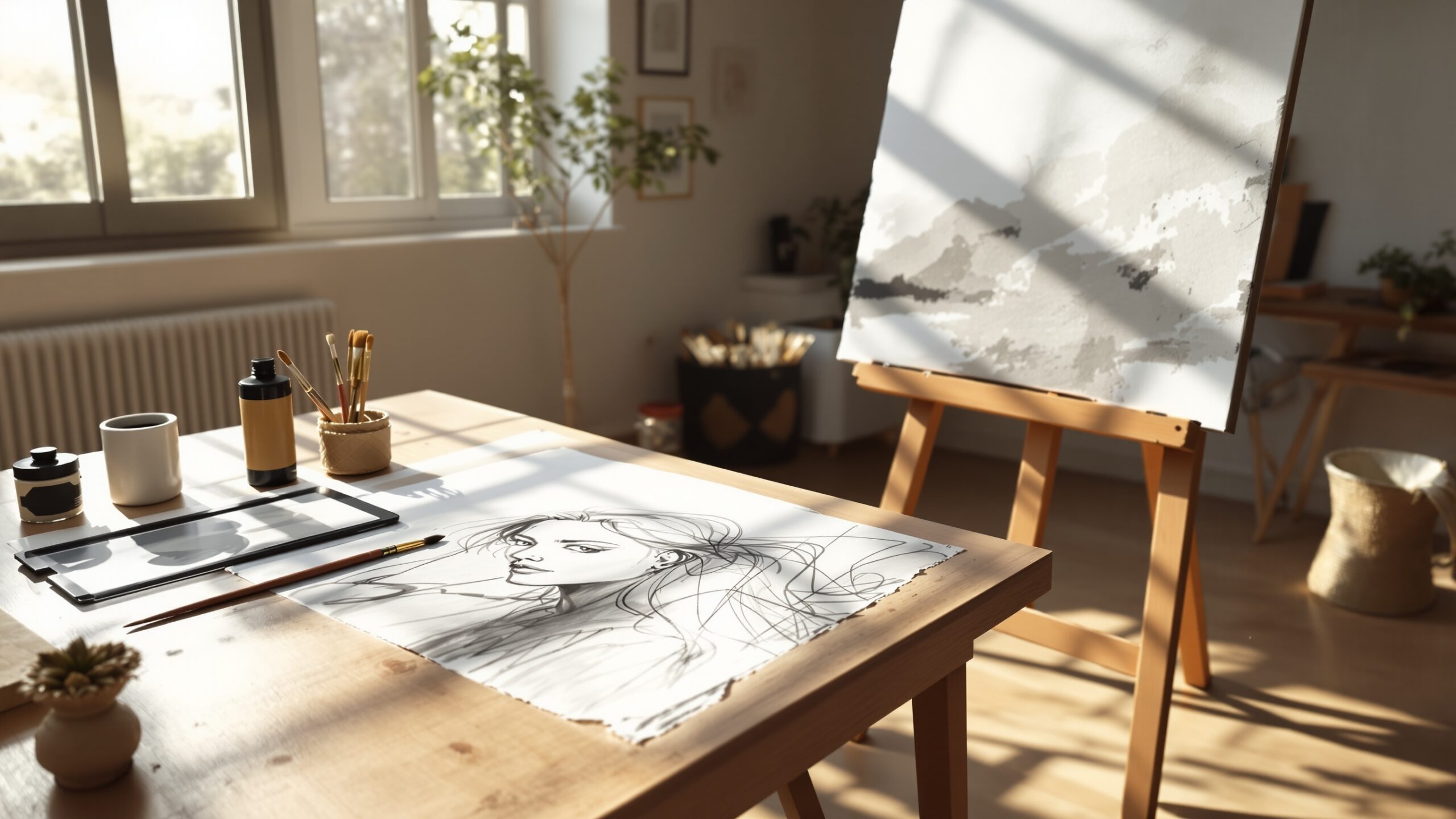
Once the surface is ready, the artist begins constructing the underlying framework of the image. This stage, often referred to as the underdrawing or preliminary sketch, serves as the architectural blueprint of the composition. It is here that proportion, perspective, and spatial relationships are established with clarity.
Master artists approach this phase with analytical precision. Using charcoal, graphite, or diluted paint, they block in major shapes and align key elements. Lines are measured, angles are compared, and negative space is carefully considered. This is not a stage for expressive flourish; it is a stage for structural accuracy.
The underdrawing allows the artist to solve compositional problems before committing to more permanent layers. Adjustments can be made quickly and efficiently, preventing costly revisions later in the process. In many cases, this stage involves a constant cycle of drawing, erasing, and redrawing until the composition achieves a sense of balance and coherence.
Despite its technical focus, the underdrawing also carries the first hints of artistic voice. The way an artist simplifies forms, emphasizes certain contours, or arranges elements reveals their interpretive perspective. Even at this early stage, the work begins to take on a distinct identity.
Blocking In: Establishing Value and Form
With the structure in place, the artist moves into the blocking-in phase, where large areas of value and color are introduced. This stage transforms the skeletal framework into a more tangible image, defining the overall light distribution and basic forms.
Blocking in is about simplification. Rather than focusing on details, the artist concentrates on broad relationships between light and dark. Shadows are massed together, highlights are reserved, and midtones are carefully balanced. This approach ensures that the painting maintains a strong visual foundation, preventing it from becoming fragmented or overly complex.
Color is often introduced in a limited palette at this stage. Many master artists restrict their initial color choices to maintain harmony and control. By working with a restrained range of hues, they establish a cohesive tonal structure that will support more nuanced color development later.
This phase requires a keen understanding of value hierarchy. The artist must determine which areas will command attention and which will recede into the background. These decisions are not arbitrary; they guide the viewer’s eye and shape the narrative of the composition.
Layering Depth: The Evolution of Form
As the painting progresses, the artist begins to build layers that add depth, complexity, and refinement. This is where the true craftsmanship of master artists becomes evident. Each layer is applied with intention, responding to the layers beneath it while contributing to the overall structure of the work.
In traditional oil painting, this process often involves the use of glazes—thin, transparent layers of color that modify the underlying tones. Glazing allows artists to achieve subtle shifts in hue and luminosity, creating a sense of depth that cannot be achieved with opaque paint alone. Light appears to penetrate the surface, reflecting back through multiple layers and giving the painting a luminous quality.
Scumbling, in contrast, involves the application of a thin, opaque layer that partially obscures the underlying paint. This technique is used to soften transitions, create atmospheric effects, or introduce texture. By alternating between transparent and opaque layers, the artist builds a dynamic surface that engages both visually and physically.
Layering is not a linear process. Artists often revisit earlier areas, adjusting values, refining edges, and integrating new elements. This iterative approach allows the painting to evolve organically, with each layer informing the next.
The Role of Edges and Transitions
One of the most sophisticated aspects of layered painting is the control of edges. Master artists understand that edges are as important as color and value in defining form and guiding perception. A sharp edge can draw attention and create clarity, while a soft edge can suggest depth and subtlety.
Throughout the layering process, artists carefully manipulate edges to enhance the illusion of space. Foreground elements may be rendered with crisp precision, while background forms dissolve into softer transitions. This variation creates a sense of atmospheric perspective, reinforcing the spatial hierarchy of the composition.
Transitions between light and shadow are also refined during this stage. Rather than abrupt changes, master artists often create gradual shifts that mimic the behavior of natural light. These transitions contribute to the realism and cohesion of the work, ensuring that forms appear solid and believable.
The control of edges and transitions requires a delicate balance. Too much sharpness can make a painting feel rigid, while excessive softness can lead to a loss of structure. Mastery lies in knowing when to define and when to suggest.
Color Development: Building Harmony and Contrast
As the painting matures, color becomes increasingly complex. The artist expands the palette, introducing variations in hue, saturation, and temperature. This stage is not about adding color indiscriminately; it is about refining relationships between colors to achieve harmony and contrast.
Master artists often think of color in relational terms. A color is not perceived in isolation but in context with surrounding hues. Warm tones may be intensified by adjacent cool tones, and muted colors can be enlivened by strategic accents. This interplay creates visual interest and depth.
Layering plays a crucial role in color development. Transparent glazes can alter the perceived temperature of a color, while opaque layers can redefine its intensity. By building color gradually, the artist achieves a richness that cannot be replicated through a single application.
Color also carries emotional and symbolic weight. Decisions about palette influence the mood of the painting, shaping the viewer’s response. Whether aiming for dramatic contrast or subtle harmony, the artist uses color as a tool for storytelling.
Texture and Surface Dynamics
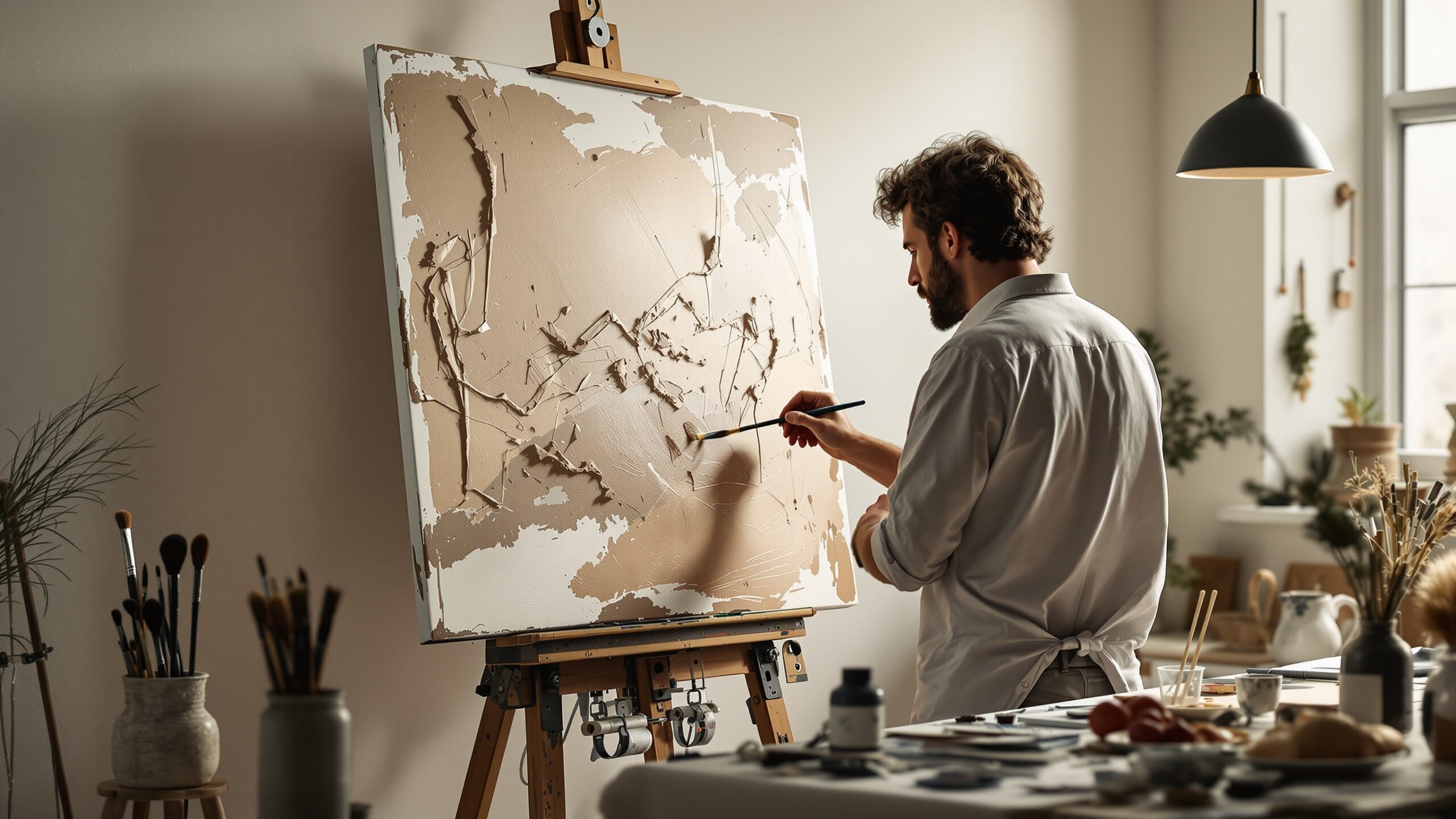
Beyond color and form, the physical texture of the painting becomes an integral component of its impact. Master artists use a variety of techniques to create surface variation, from smooth, polished areas to thick, impasto applications.
Texture adds a tactile dimension to the work, inviting viewers to engage with it on a sensory level. Thick brushstrokes can convey energy and movement, while delicate, layered glazes can create a sense of depth and refinement. The interplay between these elements contributes to the overall character of the painting.
The choice of tools also influences texture. Brushes of different shapes and sizes, palette knives, and even unconventional implements can be used to manipulate paint. Each tool leaves a distinct mark, contributing to the visual language of the work.
Surface dynamics are not merely decorative; they reinforce the conceptual framework of the painting. An artist may use rough textures to emphasize tension or smooth surfaces to evoke calm. In this way, texture becomes an extension of meaning.
The Final Pass: Refinement and Resolution
As the painting approaches completion, the artist enters a phase of critical evaluation and refinement. This stage involves subtle adjustments that bring the work into balance. Highlights are intensified, shadows are deepened, and edges are fine-tuned.
Master artists often step back from the canvas repeatedly during this phase, assessing the work from a distance. This broader perspective reveals imbalances that may not be apparent up close. The goal is to ensure that every element contributes to a cohesive whole.
This stage also involves restraint. Knowing when to stop is one of the most challenging aspects of painting. Overworking can diminish the vitality of the work, while stopping too soon can leave it unresolved. Master artists develop an intuitive sense of completion, recognizing the moment when the painting achieves equilibrium.
The Studio as a Living Environment
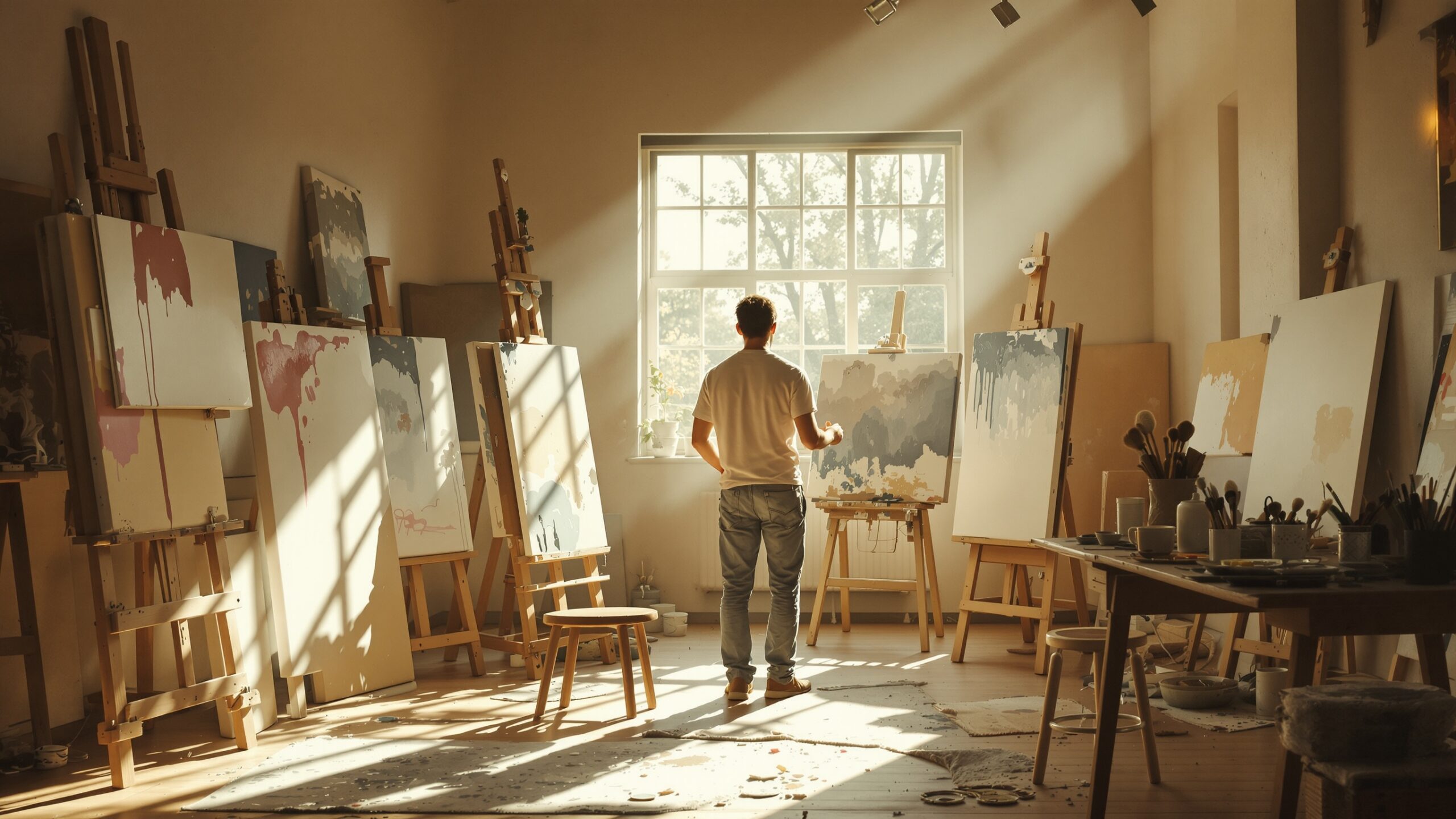
Throughout this entire process, the studio itself plays a crucial role. It is more than a workspace; it is an environment that shapes the artist’s thinking and practice. Light, space, and organization all influence how the work evolves.
Natural light is often preferred for its consistency and clarity, allowing artists to perceive color accurately. The arrangement of tools and materials affects efficiency and focus. A well-organized studio supports a fluid workflow, minimizing distractions and enabling sustained concentration.
The studio also serves as a repository of ideas. Finished works, ongoing projects, and reference materials coexist, creating a visual dialogue that informs new creations. It is a space where experimentation is encouraged and failure is accepted as part of the process.
The Invisible Layers: Time, Discipline, and Vision
While the physical layers of paint are visible to the viewer, the most important layers remain unseen. Time, discipline, and vision underpin every stage of the process. Master artists invest countless hours in practice, honing their skills and deepening their understanding of their medium.
Discipline manifests in the consistency of effort, the willingness to revise, and the commitment to quality. Vision guides the artist through uncertainty, providing a sense of direction even when the path is unclear. Together, these elements form the foundation of mastery.
Each layer of a painting represents a decision, a response, and a step forward. The cumulative effect of these layers is what gives a masterpiece its depth and resonance. It is not the result of a single moment of inspiration but the product of sustained, deliberate effort.
The Art of Building a Masterpiece
Inside the studio, the creation of a painting is a process of construction, not revelation. Master artists build their work layer by layer, integrating technical skill with creative insight. From the initial concept to the final refinement, each stage contributes to the evolution of the piece.
This layered approach reflects a broader philosophy of art-making. It acknowledges that complexity arises from accumulation, that beauty emerges through refinement, and that mastery is achieved through persistence. By understanding this process, we gain a deeper appreciation for the craftsmanship behind iconic works of art.
The next time you stand before a painting, consider the layers beneath its surface. Each brushstroke carries the weight of decisions, revisions, and intentions. What appears effortless is, in reality, the result of a meticulous and deeply human process—one that unfolds quietly within the walls of the studio, layer by layer.