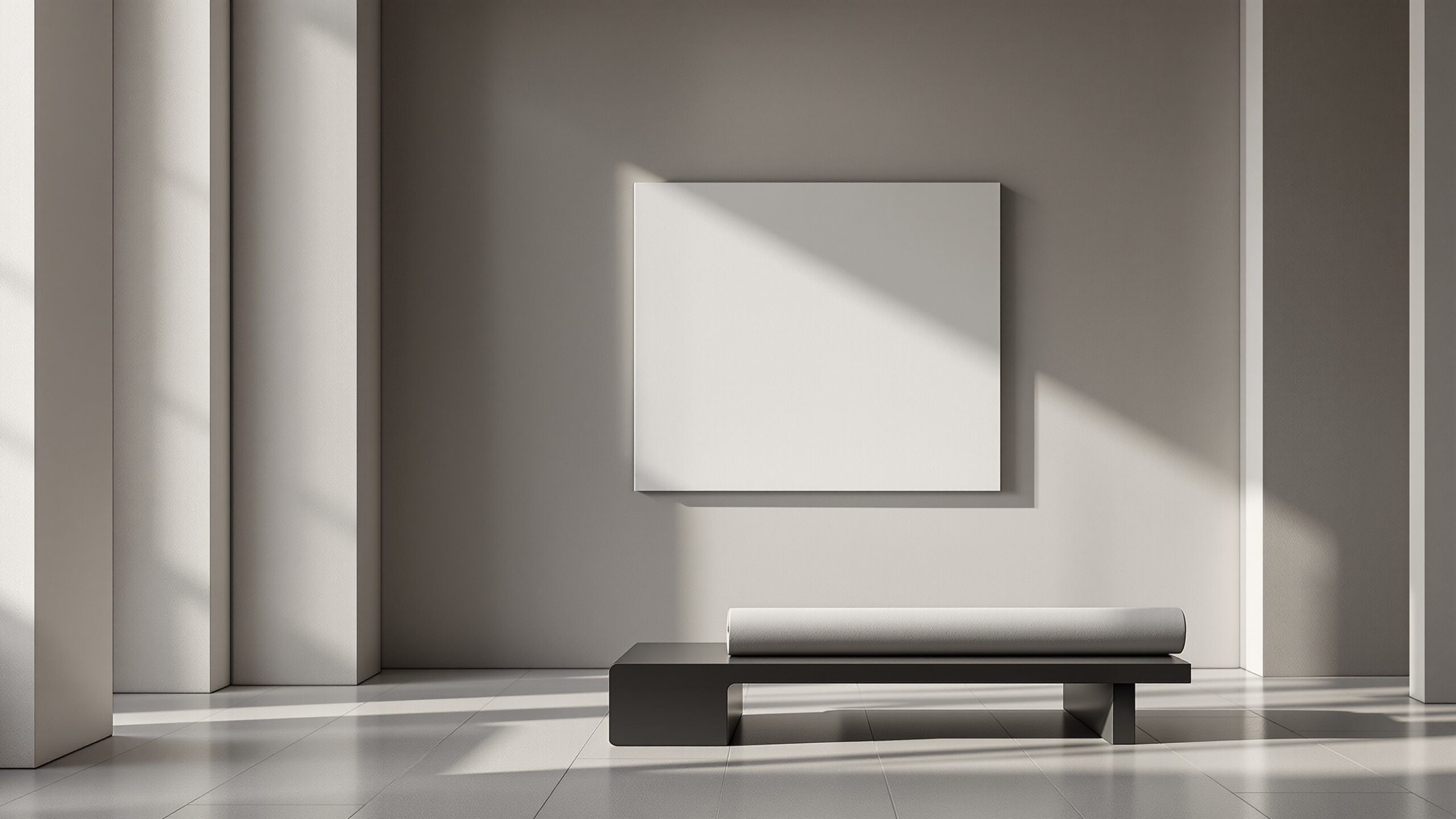
The Moment of Decision: More Than Just a Format
Every piece of art, whether it begins as a digital file or a hand-painted original, eventually reaches a defining crossroads: how it will be presented. For canvas-based work, that decision often narrows to two distinct options—stretched canvas or rolled canvas. At first glance, the difference may appear purely logistical, a matter of packaging or display readiness. In reality, this choice influences not only how the artwork is seen, but how it is preserved, transported, valued, and even emotionally experienced. Understanding the nuanced distinctions between stretched and rolled canvas is essential for artists, collectors, interior designers, and anyone investing in visual storytelling. Each format carries its own set of advantages, limitations, and ideal applications. The decision is less about which is better and more about which is right for a specific purpose.
A: Stretched is ready to hang; rolled offers flexibility and lower shipping cost.
A: Yes, especially for shipping and large sizes.
A: Yes, either DIY or through professional framing services.
A: Both last long with proper care, but stretched frames can warp over time.
A: Yes, tubes protect it well, often better than framed options.
A: Yes, including pliers, staples, and a sturdy frame.
A: It can if mishandled, but proper rolling prevents damage.
A: Medium to large sizes benefit most from pre-stretching.
A: Optional—many prefer the frameless gallery look.
A: Stretched canvas, since it’s presentation-ready.
What Is Stretched Canvas? A Ready-to-Hang Statement
Stretched canvas refers to a canvas print or painting that has been carefully pulled taut over a wooden frame, commonly called stretcher bars. The process requires precision. The canvas must be evenly tensioned across all sides to avoid warping, sagging, or distortions in the image. Once secured, the artwork becomes a rigid, display-ready piece.
This format is synonymous with gallery presentation. The edges may be wrapped with the continuation of the image, left blank, or painted in a complementary color, creating a finished look that often eliminates the need for additional framing. The result is a clean, contemporary aesthetic that feels both substantial and immediate.
Stretched canvas carries a physical presence. It occupies space not just visually but structurally, projecting slightly from the wall and casting subtle shadows that enhance depth. For many viewers, this dimensional quality elevates the perceived value of the artwork, giving it a museum-like authority.
What Is Rolled Canvas? Flexibility in Its Purest Form
Rolled canvas, by contrast, is the same printed or painted material without the frame. It is delivered carefully rolled, typically inside a protective tube, preserving the surface while minimizing bulk. This format offers a blank slate in terms of final presentation.
Without the constraints of pre-stretching, rolled canvas gives buyers complete control. It can be stretched later, framed under glass, mounted onto boards, or even used in unconventional installations. For artists and collectors who prioritize customization, this flexibility is a major advantage.
Rolled canvas also speaks to practicality. It is easier to ship, store, and handle, particularly for large-scale works. A piece that might be cumbersome and expensive to transport when stretched becomes significantly more manageable when rolled.
The Craft Behind the Canvas: Materials and Construction
To fully appreciate the distinction between these two formats, it helps to understand the materials involved. Canvas itself is typically made from cotton or a cotton-polyester blend, although traditional linen remains a premium option. The surface is coated with a layer of gesso or a similar primer, creating an ideal base for ink or paint.
In stretched canvas, the stretcher bars are critical. High-quality bars are kiln-dried to prevent warping and often feature expandable corners that allow for re-tensioning over time. The stretching process must be done evenly, as inconsistent tension can lead to ripples or distortions.
Rolled canvas bypasses this stage entirely, preserving the material in its most flexible form. While this reduces immediate structural integrity, it also prevents potential stress points that can occur during stretching if done improperly.
Pros of Stretched Canvas: Convenience Meets Presentation
One of the most compelling advantages of stretched canvas is its readiness. It arrives prepared for display, eliminating the need for additional framing or mounting. For buyers who want an immediate visual impact, this is a significant benefit.
The aesthetic appeal is another strong point. Stretched canvas offers a clean, frameless look that aligns with modern interior design trends. The depth of the frame creates a subtle three-dimensional effect, enhancing the artwork’s presence on the wall.
Durability also plays a role. When properly constructed, stretched canvas maintains its shape over time, resisting sagging and maintaining consistent tension. This stability helps preserve the integrity of the image, particularly in controlled indoor environments.
Finally, stretched canvas tends to carry a higher perceived value. Its finished appearance and structural form often make it feel more like a complete art object rather than a raw material awaiting transformation.
Cons of Stretched Canvas: Limitations Beneath the Surface
Despite its advantages, stretched canvas is not without drawbacks. One of the most notable is cost. The additional materials and labor involved in stretching the canvas increase the overall price, both in production and shipping.
Shipping itself can be a challenge. Because stretched canvas is rigid, it requires larger packaging and careful handling to avoid damage. Corners and edges are particularly vulnerable during transit, and repairs can be difficult if the frame is compromised.
Storage is another consideration. Stretched pieces take up more space and cannot be easily stacked or compacted. For collectors managing multiple works or artists maintaining inventory, this can become a logistical issue.
There is also a lack of flexibility. Once the canvas is stretched, altering its presentation requires additional effort. Removing it from the frame risks damage, and resizing or reformatting becomes impractical.
Pros of Rolled Canvas: Adaptability and Efficiency
Rolled canvas excels in situations where flexibility is paramount. It allows buyers to choose how and when the artwork is displayed, offering a level of customization that stretched canvas cannot match. This is particularly valuable for designers who need to coordinate framing styles with specific interiors.
Cost efficiency is another major advantage. Without the need for stretcher bars or assembly, rolled canvas is generally more affordable. Shipping costs are also significantly lower, as the material can be packed compactly.
For large-scale works, rolled canvas is often the only practical option. Transporting oversized stretched pieces can be prohibitively expensive and risky, whereas rolled canvas can be shipped with relative ease.
Storage benefits are equally important. Rolled pieces can be kept in tubes or flat storage systems, making them ideal for galleries, studios, and collectors with limited space.
Cons of Rolled Canvas: Responsibility Shifts to the Buyer
The primary drawback of rolled canvas is that it requires additional work before it can be displayed. Stretching or framing must be done separately, often involving professional services. This adds time and, in some cases, additional cost.
There is also a risk factor. Improper handling during the stretching process can damage the canvas, leading to creases, uneven tension, or misalignment. Buyers must either develop the necessary skills or rely on experienced framers.
Another consideration is the initial presentation. Rolled canvas does not offer the immediate visual impact of a stretched piece. Until it is properly mounted or framed, it remains in a transitional state.
Finally, the perception of value may differ. While the artwork itself is identical, the unfinished nature of rolled canvas can make it feel less complete to some buyers, particularly those unfamiliar with the flexibility it offers.
Best Uses for Stretched Canvas: Where It Shines
Stretched canvas is ideally suited for environments where immediacy and presentation are priorities. Home decor is a prime example. Whether in living rooms, offices, or hospitality spaces, stretched canvas provides a polished, ready-to-hang solution that integrates seamlessly into modern interiors.
It is also the preferred format for gallery exhibitions and retail displays. The uniformity and structural integrity of stretched pieces create a cohesive visual experience, allowing viewers to focus on the artwork itself.
For gifts, stretched canvas is often the better choice. Its finished appearance eliminates the need for additional preparation, making it a convenient and visually impressive option.
Artists selling directly to consumers frequently choose stretched canvas for these reasons. It simplifies the purchasing process and ensures that the artwork is presented as intended.
Best Uses for Rolled Canvas: Freedom and Scale
Rolled canvas finds its strength in versatility. It is particularly well-suited for international shipping, where cost and logistics are critical factors. By reducing size and weight, rolled canvas makes global distribution more accessible.
Interior designers often prefer rolled canvas when working on custom projects. It allows them to select specific framing options that align with the overall design concept, ensuring a cohesive aesthetic.
For large installations, rolled canvas is often indispensable. Murals, oversized prints, and commercial displays benefit from the ease of transport and the ability to stretch or mount the canvas on-site.
Artists and collectors who prioritize storage and archiving also gravitate toward rolled canvas. It enables efficient organization and long-term preservation without the spatial demands of stretched pieces.
Longevity and Preservation: Which Lasts Longer?
When it comes to durability, both formats can offer excellent longevity if handled properly. The key difference lies in how they are maintained.
Stretched canvas benefits from its rigid structure, which helps protect the surface from accidental bending or creasing. However, environmental factors such as humidity and temperature fluctuations can affect the wooden frame, potentially leading to warping over time.
Rolled canvas, while more vulnerable during handling, avoids the structural risks associated with frames. When stored correctly in a controlled environment, it can remain in pristine condition for extended periods. The challenge lies in ensuring that it is eventually stretched or mounted without introducing damage.
Ultimately, longevity depends less on the format and more on the quality of materials, printing techniques, and environmental conditions.
Cost Considerations: Beyond the Price Tag
At first glance, rolled canvas appears to be the more economical option. Its lower production and shipping costs make it attractive for budget-conscious buyers. However, this is only part of the equation.
Additional expenses such as stretching, framing, and professional installation can narrow the cost gap. In some cases, the total investment may approach or even exceed that of a pre-stretched piece.
Stretched canvas, while more expensive upfront, offers a predictable cost structure. What you see is what you get, with no additional steps required.
For buyers, the decision often comes down to priorities. Those seeking convenience and immediacy may find stretched canvas to be the better value, while those prioritizing customization and flexibility may prefer rolled canvas despite the additional steps.
The Emotional Dimension: How Format Shapes Experience
Beyond technical considerations, the choice between stretched and rolled canvas influences how art is experienced. Stretched canvas presents itself as a finished statement, inviting immediate engagement. It feels complete, grounded, and ready to inhabit a space.
Rolled canvas, on the other hand, carries a sense of potential. It represents an intermediate stage, a work awaiting its final form. For some, this adds a layer of involvement, allowing them to participate in the creative process by choosing how the artwork will ultimately be displayed.
This emotional distinction can shape the relationship between the viewer and the piece. One offers instant gratification; the other invites collaboration.
Choosing the Right Format: A Strategic Decision
Selecting between stretched and rolled canvas is ultimately a strategic decision that balances aesthetics, logistics, and intent. It requires a clear understanding of how the artwork will be used, where it will be displayed, and what level of involvement the buyer is willing to undertake.
For immediate impact and ease, stretched canvas stands out as the straightforward choice. For adaptability and long-term flexibility, rolled canvas offers unmatched potential.
Neither option is inherently superior. Each serves a different purpose, addressing different needs within the broader landscape of art presentation.
Final Thoughts: Framing the Future of Canvas Art
As technology continues to expand the possibilities of digital printing and material innovation, the distinction between stretched and rolled canvas remains as relevant as ever. These formats are not relics of tradition but evolving tools that shape how art is created, shared, and experienced.
Understanding their differences empowers buyers and creators alike to make informed decisions, ensuring that each piece of art is presented in a way that honors its intent and maximizes its impact. In the end, the choice between stretched and rolled canvas is not just about format. It is about vision—how an idea moves from concept to physical reality, and how that reality is ultimately brought into the world.